
The science behind
your position.
ErgoFiT is the only predictive bike fit system that incorporates anthropometrics, flexibility and training history to calculate your optimal position before the fit begins.
Most bike fits are built on guesswork
.jpg)
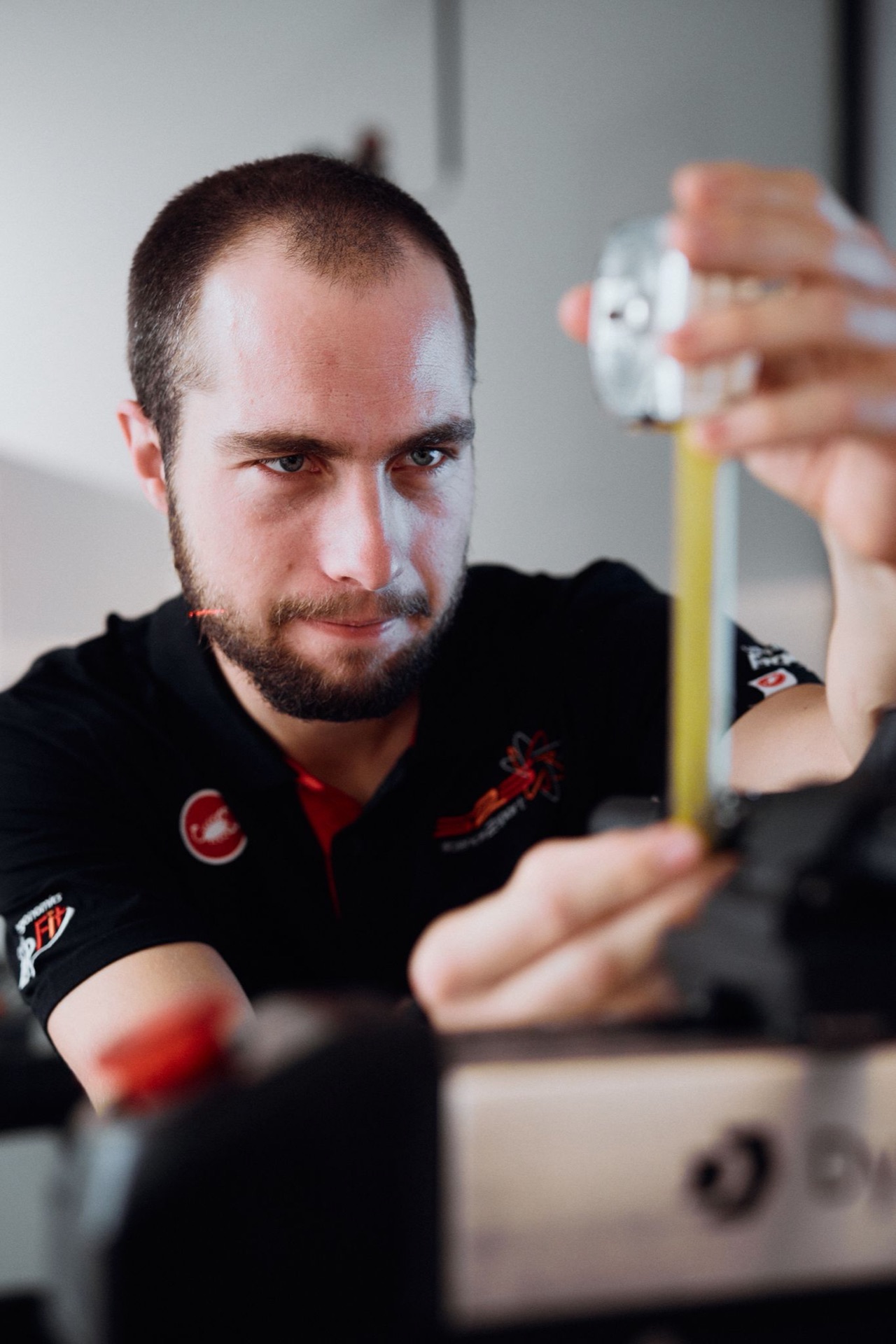
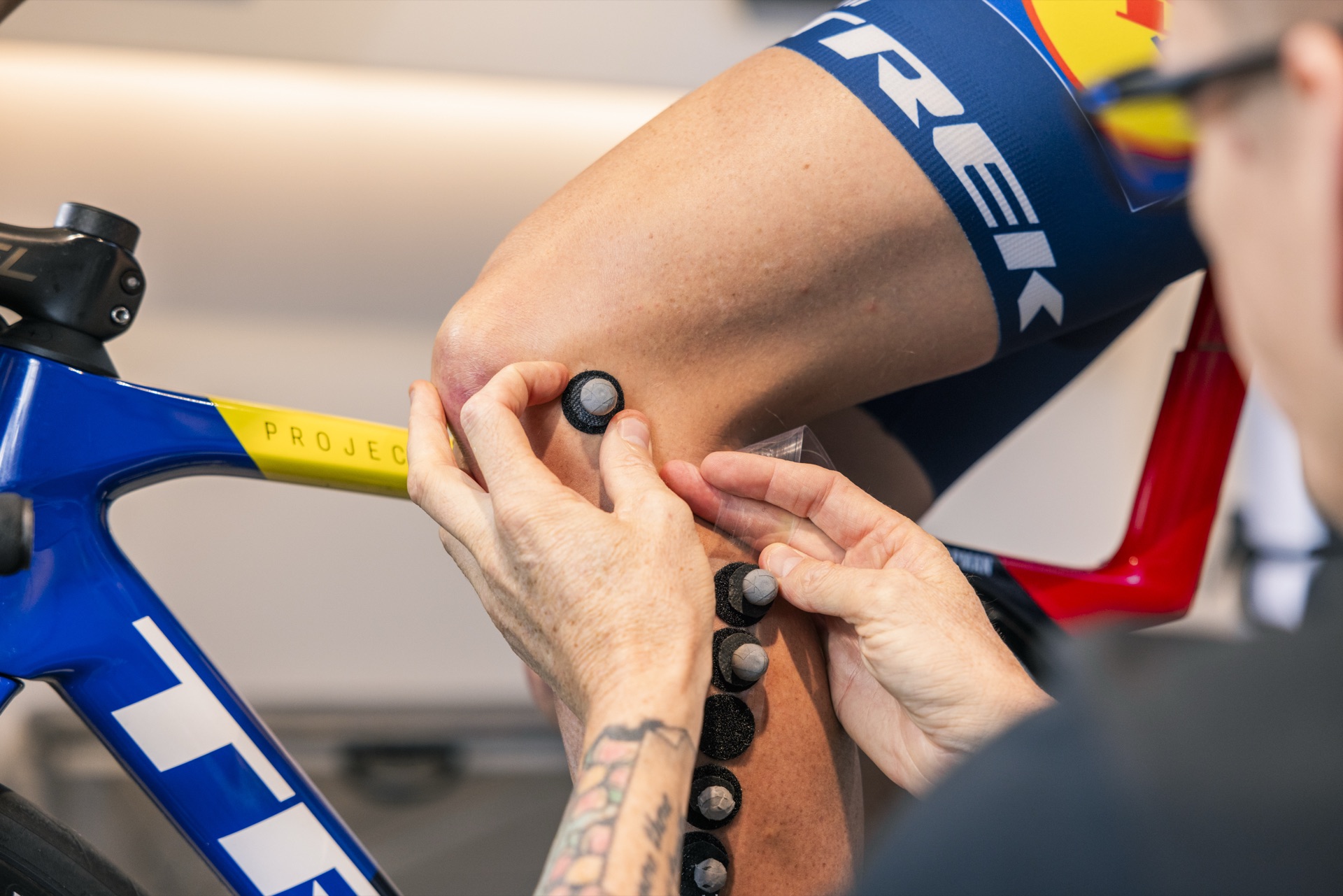
Bike fitting — or cycling biomechanics when using scientific terminology — is a rapidly evolving field with an increasing number of tools available. But the proliferation of technology hasn’t solved a fundamental problem: less than 15% of fitting tools available are scientifically validated for their accuracy and efficacy.
Most systems rely on subjective visual assessment or static formulas based on height alone. Two riders of identical height can require frames up to two sizes apart, depending on the ratio of their leg length, torso length and arm length — combined with individual flexibility and training history.
The risk of buying or being fitted to the wrong size frame is very real and more common than most cyclists expect. An incorrect frame size can be manipulated to create the impression that the bike fits, but there will always be consequences: compromised handling, suboptimal muscle recruitment patterns, or chronic injury.
of bike fitting tools available are scientifically validated for accuracy and whether they actually achieve what they claim.
Same height. Radically different fits.
Traditional fitting methods would give these twins the same position. ErgoFiT gives them the right one.

.webp)
The only system that predicts before it fits
ErgoFiT is currently the only predictive bike fitting system that incorporates measurements of limb lengths, stature, flexibility, riding experience and other factors to calculate the optimal position before the cyclist touches the bike.
This computerised prediction determines correct frame size, saddle height, saddle setback, handlebar reach and handlebar drop — establishing the macro adjustments first, so time can be spent perfecting the nuanced details of the fit.
A frame that is too big will never be optimal
The wrong frame size is one of the most common and consequential mistakes in cycling. It starts at the point of purchase and compounds with every ride.
Most manufacturers recommend frame sizes based on a simple height range. This ignores the ratio of leg length to torso length to arm length — which varies enormously between individuals of the same stature. Two riders at 180cm can require frames up to two sizes apart.
Add flexibility to the equation and the picture becomes even more complex. A rider with reduced hamstring and spine flexibility will require a shorter reach and lower saddle height than their measurements alone would suggest. Without a predictive system that accounts for all of these factors, choosing the correct frame size to a high degree of accuracy is not possible.
A frame that is too large can be adjusted to appear correct by shortening the stem or reducing saddle setback. But this shifts the centre of mass forward over the front wheel — causing under-steer and front wheel slide risk in sharp turns or wet conditions.
Compensating through altered setback causes over-recruitment of the quadriceps, placing them at risk of premature fatigue. Similarly, using excessive handlebar drop to compensate for insufficient reach produces the right torso angle but with too much lumbar flexion — a direct path to chronic lower back pain.
Book a standard ErgoFiT and split it across two sessions. Appointment one (pre-purchase): full physical assessment, flexibility screening, saddle pressure mapping and time on the Dynamic Cycling Fit system — giving you definitive frame sizing data to buy with confidence. Appointment two (post-purchase): your bike fitter sets up and optimises the position on your new bike. One fit, two visits, zero guesswork on frame size.
Every adjustment is measured, not estimated
Many bike fittings are performed without objective measurements. ErgoFiT uses a simplified X-Y reference system based on the crank axle — eliminating inaccurate methods like measuring from saddle tip to handlebar.
A simple self-levelling crosshair laser provides accurate, repeatable measurements that work on any frame geometry — from aero road bikes to 29er mountain bikes — where traditional seat-tube-angle methods fail.
The initial position is documented before any changes begin, so every adjustment is recorded and reversible.
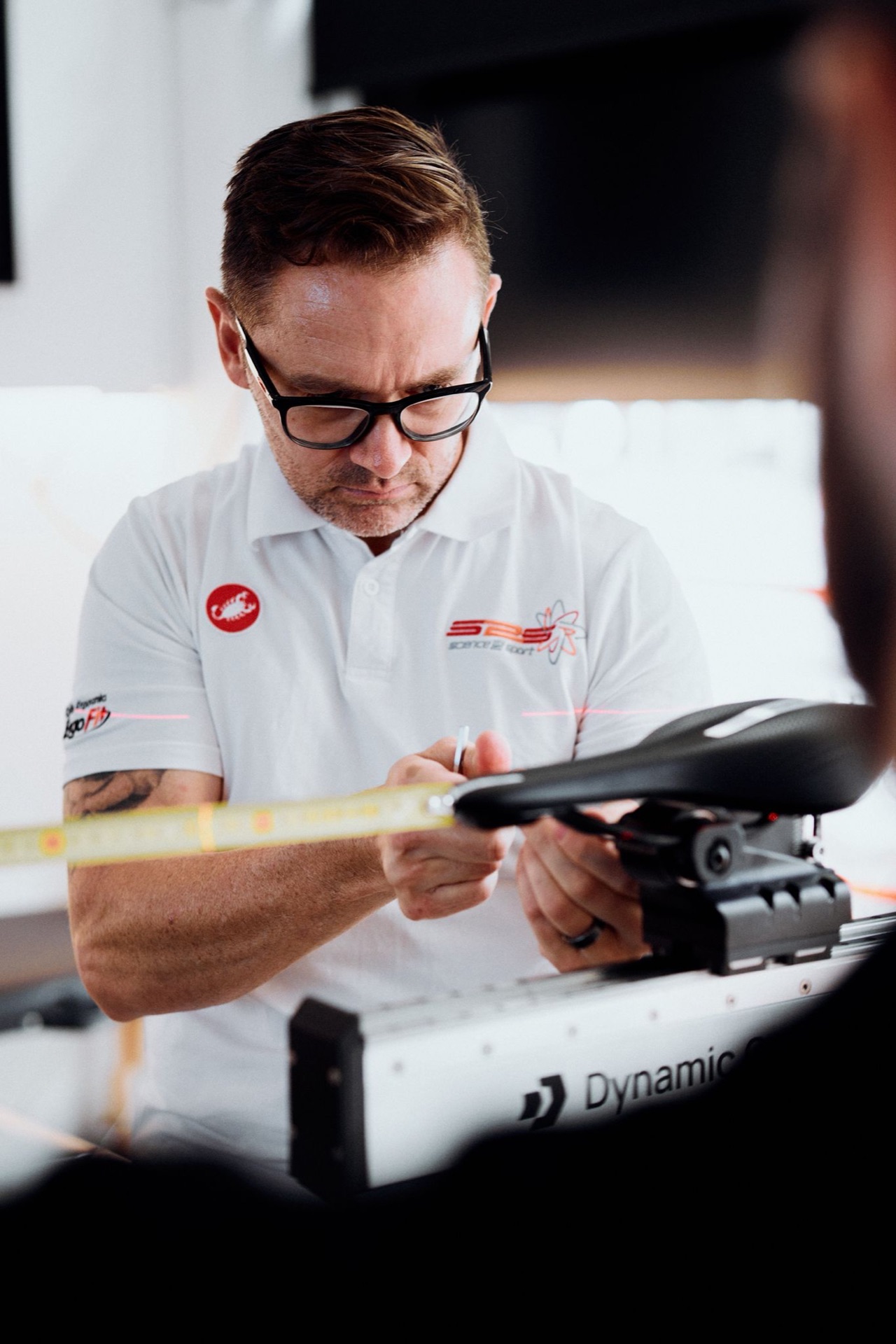
Five steps. Zero subjectivity.
Each step is independent. The level of redundancy corrects for almost all possible errors made during the fitting.
Saddle pressure mapping: the most meaningful data
.webp)
Of all dynamic assessments available, saddle pressure mapping provides the most practically relevant information. It reveals centre of pressure, rider stability, and guides saddle height, setback and handlebar reach in an indirect but repeatable way.
Dynamic measurements change depending on the cyclist’s power output, and need to be assessed at a specific percentage of maximal heart rate or power. ErgoFiT controls for this — making results reliable and comparable across sessions.
Recent research has shown that static kinematics, 2D video and 3D motion capture all have similar levels of accuracy, reliability and validity. The common belief that dynamic 3D analysis is inherently superior to simpler methods is a misnomer.
One system. Every bike.
ErgoFiT adapts to the biomechanical demands of each discipline. The predictive algorithm adjusts parameters based on riding position, terrain and equipment.
Published research
The science supporting the ErgoFiT process. Peer-reviewed, published and cited across the biomechanics literature.
Ready to book?
Position is everything.
The same methodology used for Tour de France podium riders. No upselling. No guesswork. Just data.