
Stop Saddle Sores in Their Tracks, Permanently

We do bike fits in Cape Town or Girona, Spain, or you can visit any of our accredited ErgoFiT providers.
The best way to kick saddle sores to the kerb is by wearing a high quality pair of cycling shorts with chammy cream applied, and importantly a professional bike fit that includes some key steps that we list and discuss below.
An expensive bike deserves a thorough bike fit.
We offer the best, most thorough bike fits across the whole industry, and we use our ErgoFiT system at all levels, from Tour de France winners and world champions, all the way to the complete beginner level.
Reduce saddle friction by improving your core strength
Another way to prevent saddle sores is by improving your core strength. This reduces movement on the saddle whilst pedalling. In addition to bike fits, strength & conditioning programs are available through our Science to Sport coaching services.
What Are Saddle Sores?
Cysts From Cycling
Saddle sores, or ischial hygromas in medical terminology, are fluid-filled cysts that develop beneath the sit bones within the soft tissue between the skin and the bone.
They result from a combination of sustained pressure, shear forces, moisture, and micro-trauma to the skin and connective tissue. Over time, this trauma can cause localized tissue necrosis, forming a sac-like cavity filled with fluid and cellular debris.
Initially, a rider may feel only tenderness or thickened skin, but with ongoing irritation the area can enlarge to several centimeters in size, becoming painful to sit on and severely limiting comfort and performance.
Saddle Sore Complications
A potential complication is the spread of bacteria to this cyst via the blood. Once infected, a large abscess can form. This is obviously even more painful and can stop even the hardest rider in their tracks.
A major complication occurs when bacteria enter the cyst through sweat glands or small skin abrasions. Once infected, the cyst becomes an abscess, filled with pus and inflamed tissue.
The most common bacteria involved are Staphylococcus aureus, Streptococcus, and Corynebacterium species, all of which thrive in the warm, moist environment of cycling shorts.
If untreated, the infection can spread to deeper tissues and cause cellulitis, which may require antibiotics, incision and drainage, or full surgical excision.
Even elite riders have been sidelined by this problem. Ask Robbie Hunter, who had to pull out of The Tour while within sight of the Eiffel Tower after having to stand for virtually the whole distance in the final individual time trial.
Saddle Sore Prevention is Always Better Than Cure
Some saddle sores heal on their own, while others require medical or even surgical treatment.
A small, early-stage sore may settle completely with rest, hygiene, and topical care, often never recurring. However, if the cyst becomes walled off by fibrous tissue, rest alone will not resolve it. In such cases, a general or plastic surgeon must excise the entire cyst wall to prevent recurrence.
Following excision, a two-week recovery period is typically required for wound healing before cycling can safely resume. Returning too soon can cause scar thickening or re-formation of the cyst due to renewed friction.
Things to look for in a bike fit if you are prone to saddle sores:
Specialists in
- optimising saddle position,
- pelvic symmetry,
- pressure distribution.
This is particularly important for high-performance cyclists or anybody doing high volume training or racing.
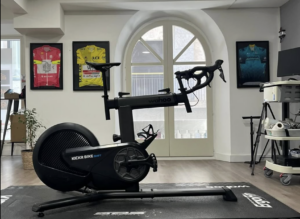
ErgoFiT Bike fit in Girona, Spain
Steps to prevent saddle sores:
- Ensure that your saddle height is set correctly to ensure that your pelvis remains stable. An overly high saddle can cause rocking, which increases shear stress and friction.
- Verify saddle width and shape.
- The saddle must support your ischial tuberosities (sit bones), not soft tissue.
- Pressure mapping or saddle sizing tools can help determine your optimal width.
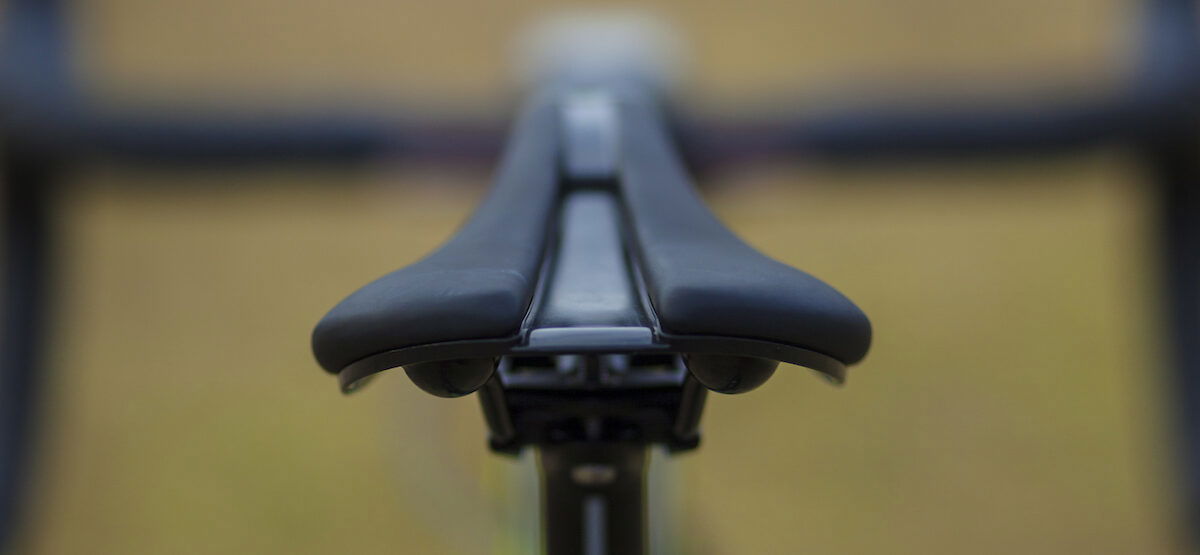
- Choose modern saddle technology. Recent innovations — including 3D-printed adaptive saddles, pressure-relief cut-outs, and short-nose geometries — significantly reduce perineal pressure and tissue irritation.
- Build and maintain core stability. A strong core and gluteal system stabilize the pelvis and reduce side-to-side motion that causes chafing.
- Invest in quality cycling bibs or shorts. Use bibs with multi-density chamois, flat-lock seams, and moisture-wicking fabrics.
- Replace them regularly; a worn chamois will lose structural integrity and harbour bacteria.
- Apply chamois cream correctly. Modern creams often contain antibacterial and barrier agents such as zinc oxide, lanolin, or tea tree oil. Apply to both skin and chamois before each ride.
- Prioritize hygiene post-ride. Don’t hang around in your sweaty cycling kit! Get cleaned up – wash with mild antibacterial soap, and dry the area thoroughly.
- Monitor early warning signs. Redness, tenderness, or swelling are early indicators. Take a short rest, keep the area clean and dry, and apply a mild antiseptic cream to prevent worsening.
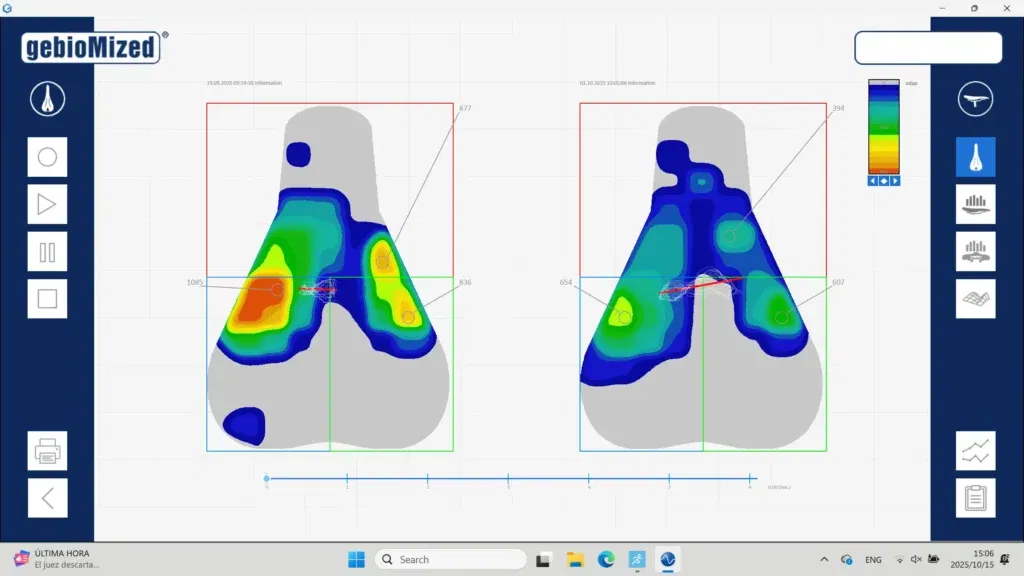
gebioMized Saddle Pressure Mapping is a valuable tool for identifying potential problem areas.
Female-Specific Considerations
Female riders are more prone to saddle-related discomfort due to wider pelvic structures, soft-tissue exposure, and urethral positioning. Attention to these factors can prevent chronic issues:
- Saddle design: Women usually benefit from wider saddles with pressure-relief channels or cut-outs to reduce perineal compression.
- Shorts and chamois: Use female-specific chamois with forward padding and contouring that matches the female anatomy.
- Hygiene: Avoid harsh soaps or perfumed products that disrupt the natural microbiome.
- Persistent swelling or cysts: These may indicate Bartholin gland irritation or vulvar folliculitis, which require medical evaluation rather than continued rest or topical creams.
- Professional fitting: A female-specific bike fit can help align pressure zones accurately and eliminate tissue pinch points.
Recovery and Return to Riding
Post-treatment recovery depends on the severity and intervention required:
- Mild inflammation: Rest for a few days, keep the area clean and dry, and use an antibacterial or zinc-based cream.
- Infected or drained abscess: Avoid riding until the wound has fully closed and there is no residual tenderness or discharge.
- Surgical excision: Follow your surgeon’s guidance strictly, followed by a gradual reintroduction of short, low-intensity rides on a clean, padded saddle with proper hygiene.
During recovery:
- Keep the wound exposed to air when possible.
- Avoid tight clothing or compression in the area.
- Resume riding only once pain-free pressure tolerance has returned.
Long-term, ensure regular saddle pressure checks, core conditioning, and kit hygiene to prevent recurrence. For athletes prone to repeated sores, consider alternating saddles or shorts during multi-week race blocks.
We hope this article will assist you in preventing saddle sores so you can enjoy pain-free hours in the saddle whilst training and racing.
If you would like to book a bike fitting in order to reduce the risk of saddle sores, contact the Cape Town or Girona team for a consultation and a quote with this form.