Common Bike Fit Mistakes — Darrel & Anthony Walsh on the Roadman Podcast
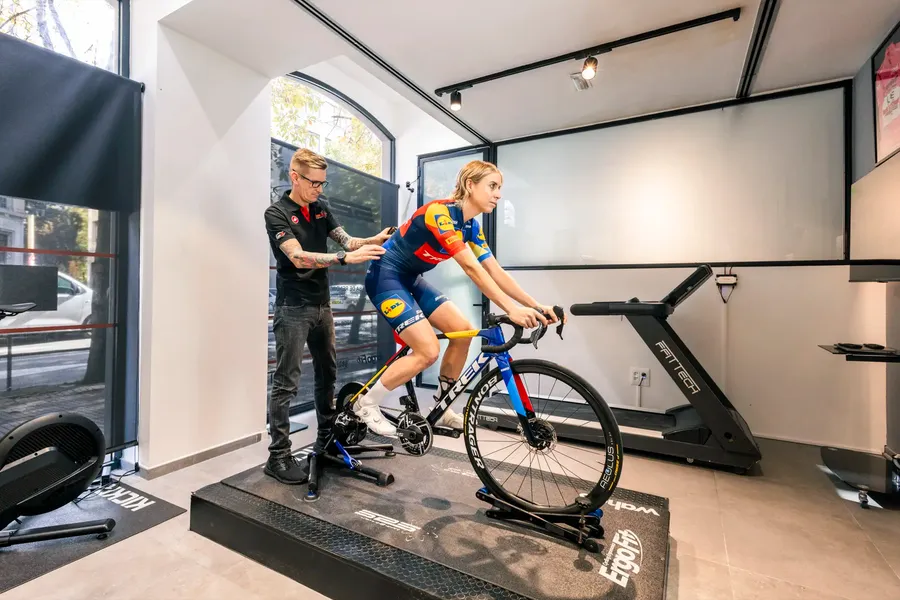
S2S Coach Darrel Fitzgerald has done literally thousands of ErgoFiT bike fits, many of them for WorldTour pros. Roadman Anthony Walsh stopped by the S2S lab in Girona where Darrel is Managing Director, to pick his brain on the most common mistakes he sees day to day.
Common Bike Fit Mistakes — And How to Fix Them
Many amateur and even pro cyclists may assume their bike setup is close enough. In Darrel’s experience, it rarely is. Below, he breaks down the recurring problems he sees — from saddle height and reach to cleat position and the limits of a practical aero position — and what to do about each one.
1. The Prevalence of Poor Fit
01:36Anthony: Roughly how many bike fits have you performed in your career?
Darrel: It is in the thousands. From October 2024 to June of 2025 alone, we performed close to 750 fits.
Anthony: When you look at an amateur cyclist, what are the first things that jump out at you?
2. Mistake #1 — Excessive Saddle Height
01:51Darrel: The first thing is almost always saddle height. Usually, it is set way too high. People are often told that a higher saddle produces more power and makes you more aerodynamic in the drops. However, they don’t take into consideration hamstring or lower lumbar flexibility.
Darrel: If your body cannot hold that position, you end up sliding forward on the saddle and rotating your pelvis, which causes “hip rock”. You end up looking like a “prawn” on the bike because you can no longer reach the handlebars; the only way to reach them is to slide all the way to the front of the saddle.
The “Heel Test” Method for Saddle Height
Anthony: What about the old test where you clip out, put your heel on the pedal, and aim for full extension?
Darrel: If your saddle slips while you’re out and you don’t have a tape measure, that will get you reasonably close. However, it doesn’t account for leg length discrepancies. I often see discrepancies of 5mm to 10mm. Using that test, your saddle will be either too high on the short side or too low on the long side.
3. The Science — Efficiency vs. Adaptability
05:09Darrel: The human body is amazing; it can adapt to a poor position without immediate injury, but it becomes a question of efficiency. If your saddle is too high and you posteriorly rotate, your glutes aren’t working as well as they should. Proper positioning improves muscle recruitment and breathing efficiency, making you far more economical.
4. Mistake #2 — Reach and Flexibility
06:54Darrel: Reach is another major issue. It boils down to flexibility and how well a rider can rotate their pelvis anteriorly. If the reach is too far, people slide to the front of the saddle. This causes rocking and rolling, which is a primary cause of saddle sores. It isn’t always a specific pressure point; often, it is the constant rubbing that breaks the skin.
5. The Shorter Crank Trend Towards 165mm
11:32Anthony: Everyone seems to be moving toward 165mm cranks lately. Does that work for everyone?
Darrel: No. I’ve had elite athletes switch to shorter cranks and lose 20 to 30 watts immediately. Leg length plays a massive role. If someone has a very long femur, shorter cranks might not work well. However, they can be very effective for stockier, shorter riders.
Darrel: You basically have to test riders on a case-by-case basis. Biomechanical variance means it’s almost impossible to know how someone will respond without first putting them on a bike with shorter cranks.
6. Mistake #3 — Cleat Position and Numb Feet
17:50Darrel: Many people just “bang” their cleats into the center of the shoe. We prefer to start in a neutral position between the first and fifth metatarsal and then adjust based on the rider’s specific strike point.
Anthony: Is numbness always a cleat issue?
Darrel: Not necessarily. Numb feet are often caused by shoes that are too narrow. On hot days, your feet swell. Loosening the shoe helps, which is why you see newer shoe designs featuring much wider toe boxes.
7. Final Myth — Aero is Always Faster
26:46Darrel: The biggest myth to dispel is that “aero is always faster”. If you cannot hold the aerodynamic position, you aren’t going fast.
Darrel: People also tend to view a bike fit as a “one and done” event, like getting a driver’s license. But our bodies change. Your flexibility at age 25 is not the same as it is at 40. As your training volume increases or you change disciplines, your fit needs to evolve with you.

Work With an S2S Coach
Train with the same sports scientists and coaches behind WorldTour performance. Our coaches build individualised programmes around your physiology, goals, and schedule.