Strength & Conditioning (S&C) is an important training tool that helps develop the bio-motor skills that underpin cycling performance – and in recent years, S&C has slowly but surely started to get more popular with cyclists of all ages and abilities looking to include it alongside their endurance training. Which as an S&C coach who also rides is awesome to see.
However despite the increased research focus and popularity in this area of training, a lot of misbeliefs or fears still surround the thought process of S&C for cyclists with the role and application of S&C within cycling being one of many contributing factors to the various conflicts that can exist between coaches, athletes and within the sport in general.
WHAT ARE WE TRYING TO ACHEIVE?
Cyclists aren’t famous for their bulging muscles as athletes, however being strong and robust is super important. S&C will help give you the capacity to express your athleticism by helping raise the capacity of the muscular system so that it can produce and resist higher levels of force whilst you’re on the bike. S&C can also help in being a preventative step in the soft tissue and load related injuries that are common due to the fixed positions and repetitive nature of the sport.
This robustness that being stronger provides will help increase the odds of being able to handle higher training loads with less fatigue, therefore maintaining better health throughout a long and strenuous year. Something of which, is easily overlooked.
WHAT ARE YOU TO GAIN?
Being stronger and more powerful will enable you to produce more force through the pedals, therefore being able to reach peak torque earlier in a pedal revolution, and capable of going faster for less effort. A riders Peak Power (Wingate and 6s Sprint), Time Trial Performance and Power at Onset Blood Lactate Accumulation (OBLA) (4mmol.L) are three endurance outcomes that are deemed as key predictors of cycling performance have repeatedly shown to improve across multiple studies.
However, be careful of adopting the traditional approach of only conducting S&C in the winter as it’s important to understand that if you stop strength training for an extended period of time then these benefits will soon be lost. The observed time frame of detraining and starting to lose the athletic qualities of strength and power can happen in as little as 4-6 weeks which will ultimately negatively affect your endurance performance and the characteristics required to be explosive on the bike. So keeping it a regular part of your training is key.
DEVELOP THE QUALITIES YOU'RE MISSING
It is important to not get wrapped up in too much ‘sport specificity’ away from the bike and trying to mimic the sport of cycling either via endurance or the positions we hold whilst riding. Whilst you may think it’s useful, you’re actually limiting your own or your riders potential of developing the athletic qualities that help support high performance on the bike.
So try not to get sucked in by a common belief that as cyclists are endurance athletes, if they are going to undertake any form of S&C, then it must be done with high reps to help replicate the endurance demands of riding a bike.
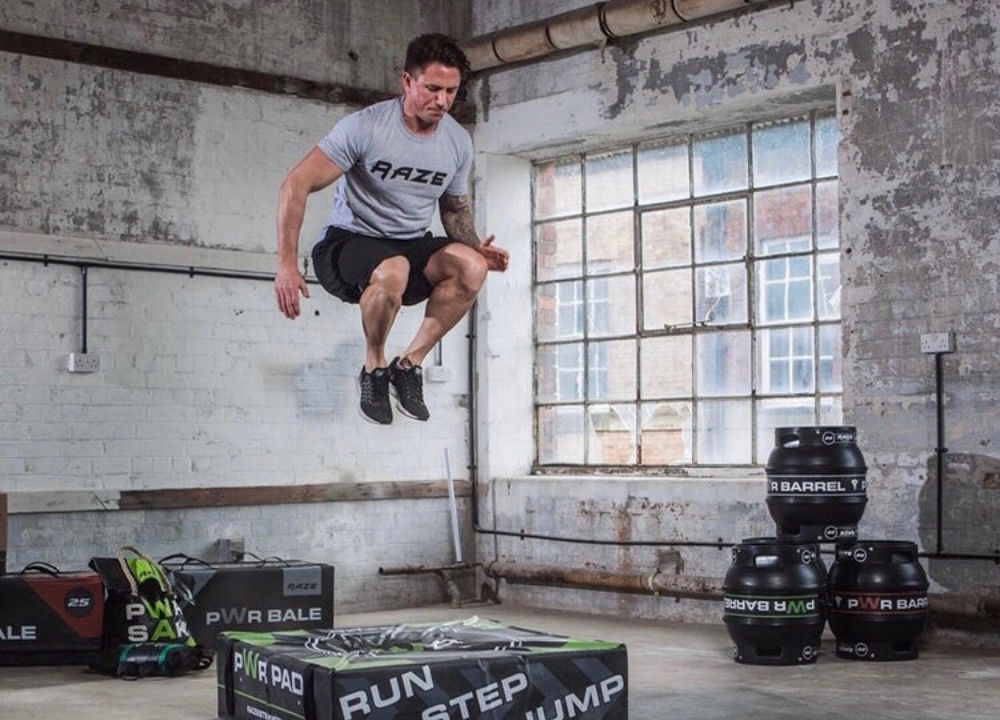
Instead it is important to focus on developing strength and power as well as restoring adequate mobility from being in such restricted/repetitive positions. Building and developing strength is general in nature and the exercises, ranges of motion used and the body positions you’re in shouldn’t look like you’re riding a bike.
HIGH REPETITION STRENGTH TRAINING IS A FOOL'S ERRAND
The average rider, from amateur through to professional, has years of cycling in their legs. Which means the sport itself is giving you all the muscular strength endurance you need as no matter what gear you are in, you are always pushing against some form of resistance. In fact if you pedal at 90rpm for 60mins, that’s 5400 repetitions, something that you’ll never replicate, or should even think about trying to replicate inside of the gym.
With low body mass being deemed the most optimal for performance and cyclists often being weight conscious, it’s understandable why many don’t like or want to participate in any strength training or haven’t seen any real benefit. Especially when high reps creates too much fatigue that is harder to recover from and are also deep into the muscle building range attempting to promote unwanted muscle and with it, extra body mass. Exactly what most cyclists do not want.
STIMULATE, DON'T ANNIHILATE.
If you don’t get the balance right, you’re going to be in a constant tug of war battle between fatigue and performance and it is the management of fatigue that is of a high priority when it comes to programming S&C in cycling as we want to help support performance and not hinder it. Careful exercise selection based on a riders training age, set/rep schemes and utilising different ranges of motions at different times of the year is important to ensure you can keep strength training a regular part of your training routine no matter the time of year.
Too much volume in the gym is the killer when it comes to fatiguing you as a rider – so lower rep ranges to help increase your overall muscular strength and power and maintain a high neuromuscular drive is key to your performance on the bike.
However, that being said if you are new to strength training then starting and staying within the 8-10 rep range would be a better idea. This will enable you to learn the skill of exercising whilst helping build the necessary strength and capacity of your muscles and connective tissues to cope with heavier loads further down the line.
Then as your training age develops and the more skilled and experienced you become, staying within the 3-6 rep range will help you build the necessary strength and power to help support your cycling performance in a safer way without having to truly max out with single rep lifts. Of which are completely unnecessary to do.
WHERE SHOULD YOU START?
Ideally, full body routines should be adhered to and depending on where you are at within your annual training cycle, this will determine how frequently and consistently you can get sessions in. A mantra I have is; twice a week when possible and once a week as regularly as possible. There will always be times when it isn’t possible but if you build up enough previous consistency, you have around a 4-6 week grace period before you lose your benefits. But I personally feel these should be seen as guidelines to provide comfort in not getting to do it all of the time and not targets to try and hit. Essentially, use it or lose it.
Now there are no ‘must do’ exercises as its not the exercise that matters, it is how you move within a given exercise that matters most, known as the ‘intent’. I.e., the concentric pushing part should be as fast and forceful as possible. That being said, there will be exercises that are more suitable to you depending on your training age, current needs, or the time of year in relation to your goals but I’d recommend getting some support of a professional to help you identify the right plan for you.
Your exercise choice will matter once you know the movement patterns you need to train and which category an exercise falls into. The movement patterns being as follows; squat pattern, hinge pattern, single leg, upper body push & pull, core/carry. If you adhere to the principles of selecting one exercise that fits into each of those patterns and doing 2-3 sets of 3-6 reps then you won’t go far wrong with your programming to get stronger and improve performance.
To conclude, cycling is an amazing sport steeped in history and culture, something of which as an avid rider and fan of the sport, I fully agree should never be forgotten. However with the knowledge that we have around S&C and cycling performance, is it now time to rethink how we approach this training methodology? How do we start to move away from the past and stop letting it continue to govern how we develop and look after the performance of a rider? Will the sport ever fully put to bed its concerns and misbeliefs surrounding S&C and evolve like the other sports who initially showed resistance have? With companies like Science 2 Sport being at the forefront of rider development, I really do think so and that S&C will end up being a fully integrated part of training. But it’s still going to take some time.
about the author
Chris is a former Physical Training Instructor in the Royal Navy and holds a Masters Degree in Strength Conditioning and Rehabilitation from the University of Portsmouth.
He works with professional cyclists in both the Men’s and Women’s World Tour as well as keen amateurs looking to challenge themselves in local races or sportives.
You can see more of his work or contact him to find out more about working with him on:@combinedathleticperformance
references
(Aagaard et al., 2011; Rønnestad et al., 2015, 2016, 2017; Gil-Cabrera et al., 2021; Valenzuela et al., 2021; Rønnestad, 2022)
Related Content & Articles
Durability for Cyclists: How Fatigue Resistant Are You?
Cycling is a sport that demands not only physical strength but also mental resilience to withstand the rigors of long rides, steep climbs, and challenging terrain. Central to achieving success in cycling is the ability to resist fatigue throughout the duration of a ride or race. The saying “it’s not how you start, but how […]
Coaching
At Science to Sport we offer personalised and interactive coaching from some of the World’s leading experts.
Torque Intervals for Cyclists – How and Why to do Torque Training
This post is an excerpt from our short course: Cycling Science: the essentials of cycling physiology and coaching. Here we cover content from the fifth module, which focuses on our best-of-the-best, go-to training sessions for S2S athletes. Previously we discussed the concept of periodisation, and compared the traditional and block periodisation models. Block periodisation recommends […]