Altitude Training For Cyclists – How to do a Live High Train Low Altitude Camp
Altitude training and exposure is an increasingly important tool in the modern high performance cycling toolbox.
Altitude training benefits include, but are not limited to:
- a reduction in lactate build up,
- increase in aerobic capacity or VO2 max,
- increase in the muscle protein myoglobin.
In this post we will cover everything you need to know when considering training at altitude.
Altitude Means More EPO & More Red Blood Cells
The benefit most people associate with altitude training is the increase in erythropoietin, aka EPO. This is the hormone that stimulates red blood cell production. Having a prolonged, decreased partial pressure of oxygen stimulates the kidneys to produce erythropoietin (EPO). EPO then stimulates the marrow in the long bones to produce more red blood cells, increasing blood volume and oxygen carrying capacity, the net result of which is you produce more power on the bike.
Where & For How Long?
While this sounds easy and you’re already packing your bags to head to altitude, come back and have a significant gain, there are a few considerations such as location and duration before heading for the hills and leaving the kids to the missus for a few days.
The most important factor is how you respond to altitude.
By this I mean does your body adapt and respond in a positive way – or does your body not respond well to altitude? Not everyone is a responder and if not, this can – and often leads to negative physiological gains which results in athlete detraining. If this is the case, it’s better to not go to altitude and rather do quality training.
Selecting your altitude training protocol
Are you only going to train or sleep at altitude? Or are you going to train and sleep at altitude?
The research has highlighted, these are all critically important components of designing an altitude training block.
The primary models which have been investigated include:
- Live High (at altitude) and Train High (at altitude) (LHTH)
- Live Low, Train High (LLTH)
- Live High, Train Low (LHTL)
While I am not going to go into each one of these in detail, I will go into the most common of the options: Live High, Train Low (LHTL).
Live High, Train Low (LHTL)
This a common and favoured method of altitude training and it’s pretty simple – the lower the altitude the more oxygen the air contains. Yes, at altitude 2000m+ there is oxygen in the air, but it is less compressed, making it harder to breathe, which makes it harder to produce power.
If your training sessions are only at high altitude – with a limited power output – for multiple weeks, there is a risk that your muscles will detrain. Whilst you win from the blood oxygen adaptation, you also stand to lose on the muscular strength side of things.
By going lower to train, you are able to train at maximal capacity.
Do sessions at a lower altitude or even at sea level where possible. Now the athlete’s cardiovascular system can perform at a higher level.
A classical study by Levine and Gundersen compared the LHTL model to the LHTH and LLRL models.
LHTL Shows Far Greater Benefits
The results showed far greater performance benefits to LHTL.
The LHTL model demonstrated increases in:
- VO2 max,
- exercise performance,
- red blood cell and haemoglobin mass.
A further study proposed additional benefit to performing all “base” training sessions at altitude and only very hard interval sessions at or near to sea level.
Location & Time Spent at Altitude
Now that we have that out the way, you can consider location and time spent at altitude.
In South Africa I often hear riders say, “We are going on an altitude camp for the week to Graskop”. Sure, it is a good training area and Harries pancakes are great, but it’s just under 1500m and 5-7 days won’t do much in the way of adaptation from altitude.
Stimulus at altitude
- starts after 10 days
- from above 2000m
- but no higher than 3000m
- and no more than 21 days.
16-17 days has been optimal in my experience
My personal experience with athletes has shown that 16-17 days at altitude has yielded good overall adaptations. For some athletes the extra week into 21 days sees a drop off in performance and values.
Above 3000m sleep & recovery take a hit
We have found that going above 3000m impacts sleep and recovery in a negative way. I had some out of this world dreams at a camp that was at 2800m!

In South Africa this is a hard find, unless you go into Lesotho. At the start of the 2020 season, we hosted a team altitude camp in Clarens, South Africa to benefit from the summer weather. While this is lower than the preferred altitude at 1800m, we increased the recommended number of days and also went across the border into Lesotho.
So, by taking the altitude and duration into account, it is possible to find an option that can be beneficial to your training.
When to go to altitude?
Plan for 3 weeks of adaptations
Timing of the altitude exposure relative to your race or target is important. The effects or window of the adaptations lasts three weeks when done correctly.
However, the effects in this window are not always immediate. You will generally feel good for the first 2- or 3-days post exposure, sometimes up to week after returning to “base”, but it is not uncommon to feel fatigue, or fall ill on days 4 and 5 back at regular altitude.
Once these sensations pass, athletes will enjoy another window period of two sometimes three weeks of good effects. This should benefit you, when doing a 3-week racing block or tour, for example.
What to expect when training at altitude
There are additional factors to be considered when going to train at altitude:
- adaptation to altitude,
- intensity of training,
- supplementation,
- duration of the camp and more.
Three Initial Days of Acclimatisation
Understanding this, it is recommended to factor in three days of adaptation when you arrive. You cannot simply go out on day 1 and smash it with an intensity session. This will have a negative effect and put you at a deficit for the remainder of your ‘camp’.
- The body will excrete water for the first 72 hours, so pay attention to hydration.
- This means a lowered fluid volume in the blood,
- which results in an inefficient cardiovascular system.
Your maximum cardiac output will be limited – and can result in increased breathlessness and heart rate for the same level of exertion at sea level.

Monitoring blood oxygen values using a pulse oximeter.
After 72 hours, your liver begins to produce an additional blood protein, which progressively restores the blood volume to pre-altitude levels around days 6-7.
One way to monitor these values is to use a pulse oximeter. This is a non-invasive tool that attaches to your finger. It reads the wavelengths of light reflected from the blood. Once values return to normal it will read between 96-100%.
Clinical monitoring is best, but can be logistically challenging
Another method of monitoring is to do a blood count. This is done before arrival at altitude, with follow up tests done at the end of each week – or every 7 days with the last count done on the final day. This is not always the easiest to do in terms of locating a clinic or hospital in the area you are at.
Monitor & Supplement Iron – Start Before You Go
Another reason to monitor your blood, is to keep an eye on your iron levels. Iron absorption is poor at altitude and as such, iron supplementation will benefit your altitude training. It is important to start this supplementation 10 to 7 days before arriving at altitude.
90mg to start is sufficient, increasing to 100mg a day. 100mg is enough to prevent a big drop in ferritin (although there will still be a drop).
Anaemia can result if you don’t pre-supplement
In short, if you arrive at altitude with insufficient iron levels/stores your body won’t be able to produce the much needed red blood cells – and can result in anaemia.
Remember to include vitamin C with your iron supplements!

Often you would think more is better, so 200mg iron would be better? A recent study shows no difference in haemoglobin concentration after altitude with between 100 and 200mg of iron. However, with no iron supplementation the value was much lower.
When at altitude, your body’s carbohydrate metabolism will increase, while your fat metabolism decreases – which is why athletes often return from bouts of altitude very lean. Because of this, it is essential to include sufficient carbohydrate intake when at altitude, as the fuel for your training.
Power output dips when training at altitude
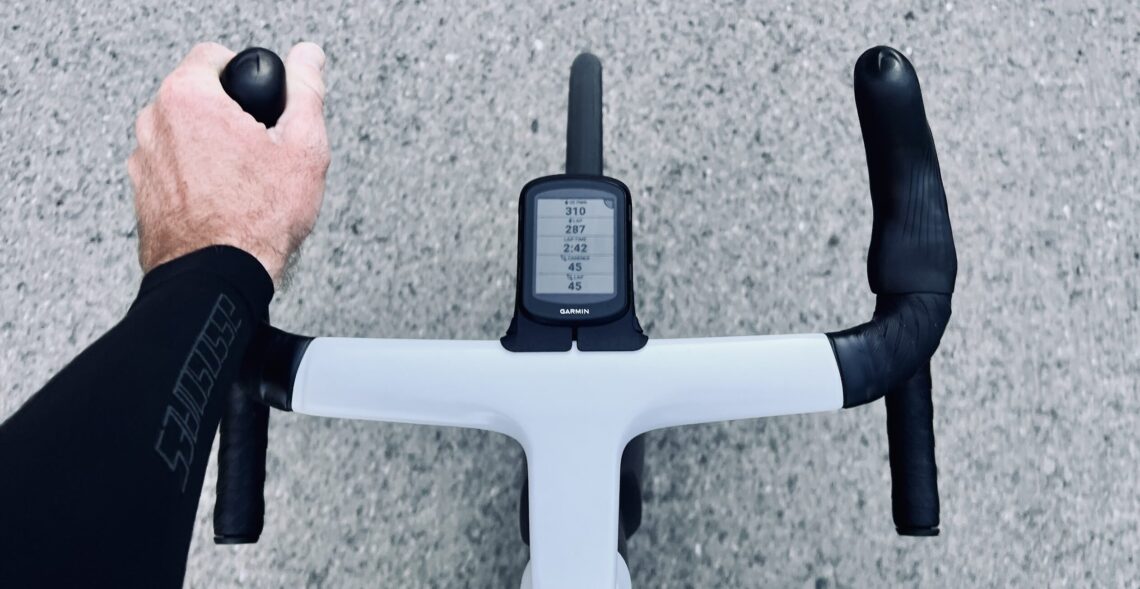
Power Output When Training at Altitude
Producing power at altitude will always feel harder. People often think that the harder the training, the better it is for you. (Shout out to the JHB Engen to Engen group.) When at altitude this is not the case – and could mean that the stimulus or gains lead to de-training.
Using FTP Values Recorded at Sea Level
When at an altitude camp, I use and implement a table based on the athlete’s Functional Threshold Power (FTP) at sea level. This is derived from the studies of Bassett.1 and Peronett.2
These equations from Bassett et al.1 were generated from four groups of highly trained or elite runners (this is obviously population-specific to that group.) However, this estimate can be used for aerobic power at a given altitude. This as a percentage y of what is normally available at sea level, where x = elevation above sea level in km.
for acclimatised athletes (several weeks at altitude): y = -1.12×2 – 1.90x + 99.9 (R2 = 0.973
non-acclimatised athletes (1-7 days at altitude): y = 0.178×3 – 1.43×2 – 4.07x + 100 (R2 = 0.974)
Where Perronet et al.2 had found the following formula
y = -0.003×3 + 0.0081×2 – 0.0381x + 1

As a typical first week, what I would prescribe to an athlete looks a bit like this:
Easy riding for the first three days and then from day five after arrival you can have your first key session.

Please consider your own personal level, and adjust the hours accordingly.
From the first week you can then carry-on training as per normal. Good blocks of training with adequate recovery would be two days on, with work, and one day recovery – OR three days on with work and one off day recovery. Personally, I prefer the two days on one day recovery and no maximal efforts during training unless you can go down low as possible below 1000m.
To go to altitude or not?
I often get asked the advantages of altitude training; whether or not it is good to include in an annual plan for an athlete’s season. This is dependent on the athlete, their level, and goals. If you are World Tour or similar level athlete – trying to win the Cape Epic for example – my opinion is that not going to altitude is a disadvantage.
I hope this answers the thoughts and questions you have about the how, why & where of altitude training – and helps you to prepare specifically for your seasons ahead.