

Haemoglobin mass (Hbmass) has long been recognised as one of the key determinants of endurance performance. It refers to the total amount of haemoglobin in the body — the molecule within red blood cells that binds and transports oxygen to the muscles.
Fire up your oxygen-carrying capacity
Hbmass governs how much oxygen the blood can carry, setting an upper limit for VO₂max, and, together with plasma volume, is a key factor in the body’s ability to deliver oxygen to working muscles.
Get altitude training benefits, minus the cost, travel and logistics
For decades, altitude training has been the go-to strategy to raise Hbmass. However, altitude comes with challenges: costly travel, limited access to suitable environments, and the need for careful management of training load during hypoxic exposure.
In recent years, heat training has emerged as a new tool that can replicate many of altitude’s haematological benefits without leaving sea level.
The Science of Heat Training and Hbmass
In 2020, Rønnestad and colleagues published a landmark study showing that five weeks of structured heat exposure (5 × 50-minute sessions per week) could significantly raise Hbmass in elite cyclists¹. This intervention led to increases comparable to those typically seen after altitude camps, despite all sessions being conducted at sea level. The study provided the first solid evidence that repeated, well-controlled heat exposure could stimulate red blood cell production in highly trained athletes.
A follow-up paper in 2022 by the same research group demonstrated that the gains in Hbmass could be maintained with as little as three heat sessions per week for three weeks². This finding opened up practical possibilities for maintenance of peak performance over longer periods of time throughout the competitive season.
When integrated intelligently, heat training can offer a powerful means to sustain performance capacity between training blocks or competition peaks – for amateur and professional cyclists alike.

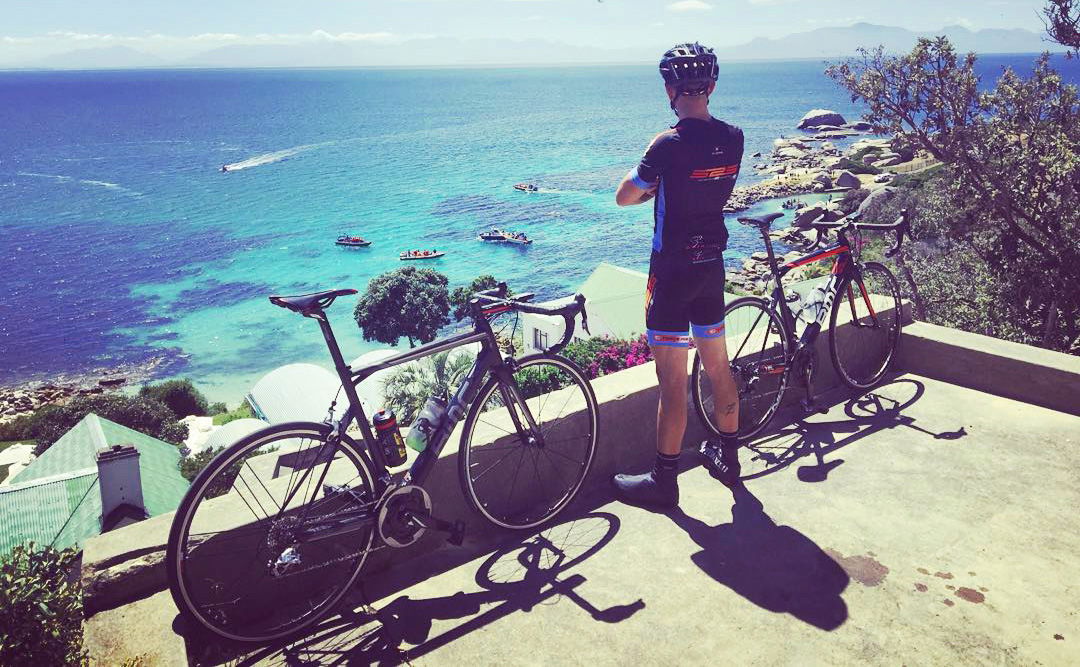
Stellenbosch, South Africa XCO Racing – summer temperatures can be over 40 degrees centigrade.
Why Heat Training Works to Increase EPO Production
The exact mechanism by which heat training raises haemoglobin mass is not yet fully understood, but several plausible explanations have emerged. One leading idea is sometimes referred to as the “critmeter” theory. Repeated heat exposure expands plasma volume, which can temporarily lower haematocrit (HCT) — the proportion of blood made up of red blood cells.
When HCT drops, the body senses a reduction in oxygen-carrying capacity and responds by increasing erythropoietin (EPO) production, stimulating new red-cell formation and, over time, raising total haemoglobin mass.
In essence, heat may create a physiological signal similar (though with a different mechanism) to that seen at altitude — prompting the body to produce more red blood cells to keep oxygen delivery to the muscles efficient.
Taking Heat Training Protocols From Research to Practice
Translating these lab findings into real-world cycling environments requires careful application. In the research setting, heat exposure typically involves five 50-minute sessions per week for five weeks, and if desired, also followed by three sessions of the same duration per week for three weeks to maintain gains².
In practice, this can be achieved with short indoor sessions at a controlled intensity in full winter clothing to elevate core temperature and induce dehydration, which in turn leads to changes in plasma volume and the responsive rise in Hbmass.

Image courtesy of CORE – https://corebodytemp.com/
While monitoring body temperature can be informative, it’s likely that the transient dehydration and plasma-volume reduction are key to triggering the haematological cascade, rather than the absolute core temperature reached. For this reason, Core sensors (or other devices used to measure core temperature at home) are useful additions to heat training, though not absolute necessities.
Heat Training Load Management
It is also important to note the importance of load management during heat training. Heat sessions add stress beyond normal training, so total volume and recovery must be adjusted accordingly. Integrating heat exposure around key training sessions or races requires experience and precision—one reason why expert guidance can make a meaningful difference to both safety and performance outcomes.
Our coaching team can tailor these principles to each athlete, ensuring that heat training complements, rather than compromises their broader performance plan.
Conclusion
Heat training is emerging as one of the most practical and effective tools for raising and maintaining haemoglobin mass—a cost-efficient, accessible alternative to altitude camps. When applied systematically and monitored carefully, it offers both professional and amateur cyclists a new way to enhance endurance performance from home.
References
1. Rønnestad BR, Hamarsland H, Hansen J, Nygaard H, Ellefsen S, Hammarström D,
Lundby C. Five weeks of heat training increases haemoglobin mass in elite cyclists.
Experimental Physiology. 2020;105(8):1312-1322.
2. Rønnestad BR, Urianstad T, Hamarsland H, Hansen J, Nygaard H, Ellefsen S,
Hammarström D, Lundby C. Heat training efficiently increases and maintains
haemoglobin mass and temperate endurance performance in elite cyclists. Medicine
& Science in Sports & Exercise. 2022;54(9):1515-1526.