Recovery Protocols with Red Bull - BORA - hansgrohe Director of Coaching, John Wakefield
1. Introduction
00:00...recover, there's no progression, essentially, from your stimulus. And I do find that, whether it's a professional or even an amateur athlete — sometimes even more an amateur athlete, because they have limited time or availability to train — they always remove the recovery side of it.
A bulletproof system that we do run is our submaximal fatigue test, which is obviously power-based or heart-rate-based, but it also has a subjective wellness component. When you correlate the two, it's a really good way of monitoring an athlete's progression, or simply fatigue.
Welcome to the TrainingPeaks CoachCast. I'm your host, Dirk Friel. In each episode, we'll sit down with industry experts to discuss coaching methodologies, the latest research, and leading tools for endurance training. Visit trainingpeaks.com for more training and coaching.
My guest today is John Wakefield, who is founder of Science to Sport coaching, based in Girona, Spain. Science to Sport also does bike fits and physiological testing. John also has a wealth of experience within pro road cycling, as a past performance coach within Team UAE, and he is currently a coach at Red Bull – BORA – hansgrohe WorldTour cycling. I hope you enjoy this episode, where we chat about the importance of rest and how to track recovery.
All right, John Wakefield, my guest today — thank you so much, calling in from Spain. Where are you in the world, John?
Yeah, thanks very much for having me. Quite overwhelming to get the email. At the moment I'm in Andorra. I hover between here and Girona, and I head back to Girona this evening, after this podcast.
I remember I did a few races in Andorra, and I liked, when you raced, that you had a net drop — my favourite race is a net descent.
Yeah, correct. But it's either up or down — you go up or you're going down, there's no sort of horizontal recovery.
Well, you don't have a Spanish accent, so tell us about your background and how you made your way to Girona. Tell us more about yourself.
Originally from Cape Town in South Africa, still super passionate about it. I moved out of there to Europe — I'd been coming in and out a little bit from 2014, and then decided to pack my bags in 2019 and moved to Girona, just because I knew it well. Well, everyone does. I knew it super well, it was easy access, kind of in and out, and there's also very strong English content there, so it was easier for someone who can only speak English to come to Europe. And yeah, landed up there.
Obviously I was working on the team at the time, and travelling backwards and forth to South Africa was — you know, it's 28 hours door to door. So after a while it became a bit stressful, and I kind of made the move more on an emotional side, where I was coming back from the winter, and every flight I had was delayed, so I missed a flight. What should have taken essentially 26, 28 hours took me almost 40 hours. I just walked in, packed bags, and I was out. That's how I landed up in Europe.
So how about cycling? You obviously had started the cycling passion down in South Africa. How did that progress — education, were you doing everything you're doing now down in South Africa?
Yeah, obviously just on a slightly smaller scale. I landed up in cycling a little bit by accident. I was racing motocross beforehand, and I had a series of accidents, and during the rehabilitation period of my last accident, the gentleman doing my rehab was a professional cyclist. I couldn't run because of leg injuries, and he said to me, "oh, get on a bicycle," and, as they say, the bug bit. That was it.
I really had a passion for it then, and when I stopped racing motocross, I started coaching it, and I became super involved in that, both locally and internationally. I'd met who is now my business partner — he's also Head of Performance at UAE Team Emirates, Dr Jeroen Swart, or Associate Professor Jeroen Swart — and we were doing a lot of crosswork. He said to me, out of the blue, "hey, why don't you become a cycling coach?" and I was like, okay. I took a look at it; it wasn't something I'd wanted to get into, and we landed up being business partners, and here we are today.
It just kind of evolved, from single athletes in South Africa, to one or two teams in South Africa, to international athletes, as it does, and then a team, and then another team, and on your podcast now — the dream comes to life.
Yeah, it was a 20-year dream, though. It's taken sort of 20-odd years to get to this particular day. But it really, as I'm sure you know...
2. The Science to Sport Girona Lab
05:30...even from your side, it's a quick journey when you open your eyes.
Yeah. So, in Girona you have a facility — tell us more about your lab there, and bike fitting and everything you're doing locally in Girona.
Yeah, so we opened up a laboratory in Girona which is, essentially, a carbon copy of what we have in South Africa. In South Africa we run the high-performance centre for cycling in South Africa as a company, and then we opened up essentially a sister company in Girona. There, biomechanics is pretty much our strongest point; we do physiological testing, we do some research that comes out of there, and we're now going to be introducing a medical service, with a sports physician and a strength and conditioning coach. So those are the two things that are coming now, in the next sort of three to four months.
What's the name of your lab in Girona?
Science to Sport is what it is.
And in Girona, how many coaches, staff, do you have as a company?
In Girona itself, including myself, we have three based in Girona — so it's myself, Darrel Fitzgerald, and Dr David de Klerk — and as a company as a whole, we have 11, 12 coaches in total.
Wow, nice. Okay, so now you are also employed via BORA, right, the pro team? How long have you been with them?
From last year. I moved over — I was at UAE Team Emirates from 2019 till 2022, and then I moved in '23, and now '24, to BORA. I have a contract for an extended period of time, so it was all new in the first year, but now you've kind of settled in, and it's good to go.
So how many athletes do...
3. Why Recovery Is the First Thing Athletes Cut
07:30...you oversee within the team?
Yeah, I personally oversee five athletes on BORA, and some of the other coaches have some more athletes, etc., but yeah, I personally oversee five athletes.
All right. Well, what I want to dig into today is obviously the importance of recovery, tracking recovery, techniques, just advice — all things recovery, if you will. But you manage these athletes not only within the BORA team, but amateur athletes as well. Tell us a bit more about your philosophy around recovery and the importance of that in terms of programming the upcoming workouts. For example, when you get feedback based around recovery, is that on a daily basis — are you changing programming daily? How often are you changing programming on the feedback you're getting on recovery?
Sure. Am I doing stuff daily? If that need or desire is there, based on what you get back, I'll change it every day. But typically, if I take how we do monitor athletes — and that's from a personal, and generally a company, side, as we've briefly discussed — for me, recovery is key. If you don't recover, there's no progression, essentially, from your stimulus. And I do find that, whether it's a professional or even an amateur athlete — sometimes even more an amateur athlete, because they have limited time or availability to train — they always remove the recovery side of it.
It's the first thing that goes?
Yeah, correct. It's typically longer, harder, stronger, versus sometimes getting off the gas a little bit, recover, adapt, and go longer, harder, stronger. So, yeah, for...
4. Data vs How the Athlete Actually Feels
09:30...me, recovery is really key. I've taken much abuse over the years about that, but in a fun way.
How I kind of monitor it personally is more — not only from the data you get back from the athlete, from a power meter, heart rate, etc., because data tells you one thing, but essentially an athlete will tell you something completely different. I believe in that communication part first and foremost: how do you feel? from the athlete. Once you get to know them, you'll understand if they're kind of lying to you, or just trying to push that next block on.
But alternatively to that, as a bulletproof system that we do run, is our submaximal fatigue test, which is obviously power-based or heart-rate-based, but it also has a subjective wellness component...
5. Athletes Who Are Scared to Feel Fresh
10:30...which, when you correlate the two, is a really good way of monitoring an athlete's progression, or simply fatigue.
Yeah, I want to dig into that in a bit. But when you have onboarding with an athlete coming on with you, it sounded like you almost have to beat them down — you said that sometimes there's some resistance there, because it sounds like they feel they're getting too much recovery. Is that a sentiment that you often hear?
Yeah, you do. You often hear, "oh, I've rested too much," and you're like, "well, you've had one day off this week," or "you've had one day off in a 10-day block," right? It goes back to: they think that you have to train to get fit. It's like, yes, you do, but you also need to recover to get fit. And sometimes, when you look at a new athlete you're onboarding, and you look at what they've done — even if they are self-trained — you can understand why you get the email or the messages going, "I'm stagnated, doesn't feel like I'm going anywhere, I'm always backlogged." And that's just purely because there's no recovery, simple as that.
Yeah, it's almost like they have this underlying fatigue, almost like a chronic fatigue, that's there, and they don't feel normal without it. But then there's a breakthrough, hopefully, at some point, where they actually feel like, "oh wow, I now get it — that fatigue is now gone, and I was able to break through and do something I otherwise wasn't able to do."
Yeah, it's almost like they're scared to be fresh, at times. That's kind of the feeling I get. And then you get a message, and you go, "wow man, I really felt great today," and you're like, "but that's how you're meant to feel." It's an odd one. You're like, "I really don't understand your message," and they're like, "I really felt good in the race today," and you're like, "but you should have felt good in that race, it was one of your A races."
Yeah. "Scared to feel fresh" is an absolute mental block for so many athletes. And — obviously this is not what it was meant to do, but — so many athletes are chasing the CTL, and that is in no way the intent of why it was developed. I always say, you might be more, quote, "fit" than somebody else, but the person on the line next to you might be fresher. They can beat you, even though you might, on paper, have more fitness. If you don't have that freshness factor, they're going to beat you. So it's not just about — in order to peak, that's kind of the whole point of peaking: to get rid of fitness and let this freshness come into play, so you can have that high form.
Yeah, 100%, spot on. It's 100% correct. And, as you said, going back to the CTL — I think every single person I know uses TrainingPeaks, including us as a company, phenomenal tool, but it does sometimes tend to lead to that, where someone says, "well, I have to be on 120," right? But you have somebody else on 90, and they're in better shape, and fitness, and form, and everything, and you're going, "okay, well, if you chase that mythical number, you sometimes have a regression at the end of the day."
Yeah, I always say there's a million different ways to reach 100 TSS.
100%, exactly. You can do 10 by 30-second sprints every day for four weeks and...
6. Inside the Submaximal Fatigue Test
14:15...you'll have 120, or you can ride four hours super easy for three weeks and you'll have the same value.
That's the secret.
That's the secret, exactly. So, going back to your submaximal fatigue test — is this a daily thing, every morning, three times a week? First of all, what are you asking the athlete to do, and how often?
So we like to prescribe it every seven to 10 days. Obviously, if an athlete is doing a big block of racing, or if it's a really big pro and they're doing a Tour or something like that, you would kind of miss that block, and then implement it when the timing is right, as soon as possible after, hypothetically, a Tour or a big block of racing of the classics.
Perfect example. You do that — it essentially takes, in total, a 10-minute self-paced warm-up, pretty easy, and then you perform three minutes at a certain power. That's typically either at your FTP, or between FTP and 110% of FTP. That's obviously if you have a power meter — if you have a Kickr or some power-based unit you're able to do that on. If you don't, and you only have heart rate, you would do it pretty much at what your lactate accumulation heart-rate value is once you've completed that three minutes.
So, say you'd done 300 watts as an example, you would complete it, hit the lap button on your Garmin, Wahoo, whatever the case may be. And then we have subjective wellness additionally to that, that you would answer on a question there, which is super short. So, what we'd like to know is what your RPE was for those three minutes at that specific power — how hard it felt. You want to know your time to exhaustion — so how long you felt you could have held that for. Was it only three minutes, or was it 20 minutes, if you're feeling super good?
Okay, so you actually only do three, but you're asked how long you could have done it for?
Yeah, correct. So, should someone be super fatigued, they'll put five minutes, just because the RPE may be 16 and they can only do five minutes in terms of duration.
Then, obviously, our self-reported questions and scores would be based around general wellness — your fatigue, your sleep patterns, your stress, your mood. And mood is a really good indicator, or...
7. The Subjective Wellness Score: Mood, Sleep & Motivation
17:00...indicator, and it's important for fatigue, because typically, if someone is fatigued, their mood is really on the downward spiral.
So, when you correlate all of that, and we chart it, you can see really good patterns: are they having the correct stimulus, and are we making progression? Or is the athlete fatigued, we need to back off a little bit and start training again? Or are they just stagnating — it's the same all the time, and we need to increase that stimulus, as an example, to get our next step in terms of form and fitness.
Yeah. Okay, so we have this subjective side of the equation, and the objective side, the objective data you're getting from the power meter and heart rate. But on the subjective side, when you say "mood" — it's funny, I go through the same thing myself within TrainingPeaks, within our daily metrics. You can answer all of these within TrainingPeaks. When I think "mood," oftentimes the first thing I think about is my level of motivation. And that, oftentimes, can override all kinds of objective data — if the motivation's simply not there. Do you hone in on that? You mentioned it earlier, and it tends to be a big key feedback.
Yeah. For me, mood is really important, because mood is based on motivation. So, if you're not motivated to go and hurt today on the bike, there's a reason why. It could be something simple, like, I don't know, your girlfriend's run off with the pool guy, so your mood's not really the greatest. Or you've done the classics block, you've come back onto maybe some structured training a little bit early, and your mood is still not there after four, five weeks at the classics. So that, to me, really indicates where an athlete is mentally, and what you want to adapt or change to get the best out of them. And maybe sometimes two, three days of "hey, just go ride your bike, don't care what you do," has a complete turnaround, and then they come back and say, "you know what, I'm actually ready to get back onto some structure," after two, three days. That, to me, is super important.
Yeah. And then on the sleep side of things, are you correlating — so you're asking them overall sleep quality, just how they felt their sleep was last night?
Yeah, so is it average, like normal, is it good, is it bad? Are you sleeping three hours because, I don't know, you have hyperactive legs, or your mind is racing, etc.? Again, less sleep — if you lose two hours' sleep in five days, you've essentially lost...
8. Tracking HRV and Altitude Adaptation
20:00...one night of sleep. If you take all those hours put together. So, for me, that has a direct effect on mood, in terms of how you wake up.
Do you ever correlate HRV, either ongoing daily, or within this test at all? How do you view HRV?
I do track HRV on some athletes. A lot of athletes track it themselves at the same time, which is also good. In our SFT we don't track HRV specifically, because we do track heart rate in itself. So, obviously, what the trends are doing — as a separate metric, or a separate variable, I will track HRV.
And, I guess, more on that — are you making any individual daily decisions based on today's HRV, or are you looking at the HRV trend over time?
I'm more a trend over time. As an example, if an athlete is all good, and then they come to altitude, and the first three days HRV goes through the roof, you can't make radical changes, because you've got to understand: okay, it's three days, typically adaptation at altitude; the fourth day we'll start seeing a positive change and things should settle. So it's understanding where that maybe daily change came from, based on history, before reacting to that daily change.
That's a good point, going to altitude. What are the things that get affected the most, that the athlete will feel and report back to you, which will then give you the indication that it's time to actually ramp up? What types of things are you tracking the first few days at altitude?
Sleep is definitely one of them. I find a lot of guys and ladies, by your second, third night, are having pretty radical dreams, depending on how high they are. I'm the worst — I wake up sometimes and I have the weirdest dreams at altitude. But typically it's those first three to four days, and yes, your HRV, if they are tracking it, there are changes I have definitely seen. But I take it mainly on how they felt on the bike, and I track weight, more so pre-training, post-training, what their sleep is like, and also where their mood is when they're at altitude, and sometimes a sweat ratio, but not on everyone. As I said, typically by your fourth day you're okay, and the guys can resume proper training after that.
Yeah. Well, if we talk about more the age-groupers and the amateurs here, and not pros at altitude — myself being 50-plus, another one that I have to track personally is soreness. Is that something that you'll dive into with athletes as well, especially older athletes?
The athletes I've had — it's a very limited quantity of athletes, in terms of age-groupers, that have gone to altitude and do altitude blocks. I haven't really had any negative feedback in that, or problems, if you want to call it, with regards to that. It's more, sometimes they take longer to adapt to those, you know, 70 to 90 hours at...
9. Soreness, Older Athletes & the Value of Talking
23:30...altitude. But I haven't really had any complaints, and especially not from the pros, in terms of DOMS, or muscle soreness, or anything like that.
Yeah, and I was more referring to just daily life as an older athlete — tweaking the back, or the hamstring, those types of things. You have to elicit that; if you don't get that feedback from the athlete, they're probably not going to tell you.
For sure, you've got it.
So, around communications — what about just voice, talking to the athlete via phone, Zoom, in person, versus just receiving data through TrainingPeaks?
Yeah, for me, as I say to people, I'll reply to your message as long as I'm awake. For me, I would prefer you sending me a message and saying x, y, than me waiting for that to come back on an SFT in maybe two days' time, or six days' time, if you've just done it. So, again, going back to it: you can do all this training and everything, but for me, if an athlete tells me how they feel, it's kind of the golden standard. Nothing gives you more information than someone saying to you, "I feel x."
Yeah. Okay, so on the objective side of that test that you're doing, you're collecting heart rate and power. How might...
10. Reading Heart Rate vs Power in the Test
25:00...those correlate with each other, when you're really fresh and recovered versus when you're more fatigued? What kind of patterns are you seeing between heart rate versus power?
So, your RPE and TTE would fall into those two metrics at the same time. Obviously, if an athlete is really fresh and feeling really good, they'll typically do more than your prescribed power. So if they're meant to do 300 watts, they'll do — I don't know, sometimes you see like 340 — and they feel like a hero. And that'll obviously be on typically a lower heart rate, because they've hit a peak, or they've had a really good progression. TTE will be high, and RPE will be low, essentially.
On the other end, they sometimes don't hit the power, or they do hit the power — so maybe it's just below, or it's on that 300 — but then you typically see a spike in heart rate, and with that, obviously, TTE is super short. Sometimes you see, like, three minutes only, or five minutes, and your RPE is up to like 16, 17.
So what's interesting is when you look at sometimes the subjective wellness, and then you see their TTE and RPE, or vice versa, and the two definitely don't correlate. You can say to him or her — that's when I typically pick up a phone, and I'll be like, "hey, two and two are not adding up to four here," and then you get essentially your honest answer, and it's like, "yeah, I don't feel so good."
Yeah, that's the voice, that's getting personal with the athlete and what's going on.
Yeah, correct.
So, this is only a 20-minute — let's call it a 20-minute — test. So, are you asking...
11. When and How to Run the Test
27:00...them to do this in the morning, and then go ahead and do today's training program afterwards? Or is this on a recovery day, and that's all you're going to do?
No, no, you do it prior to your session. So even if you have, say, a standard session of 3 x 10 minutes at threshold, they can do it within that, say, 30-minute warm-up: do the three-minute test, and go and do the intervals, or the two-hour recovery, or five-hour ride, or whatever they have for that day.
In terms of placement of when it is, it's typically one to two days after a recovery or easy day, so they can do, say, whatever — intervals, long ride, something else — and then they have, say, two days' recovery, and then do that test. So, if it's for your listeners and that, to do those subjective measures, you'd do it on...
12. Practical Recovery for Time-Crunched Amateurs
28:00...a recovery, or two days after a recovery ride, so you do get a bit of freshness in. You know how you feel.
Got it. How about more on the advice side of things, in terms of practical recovery routines? When you're an amateur age-grouper, you have work, life, family, training balance — what kind of routines do you try and work with amateurs on, to gain more recovery within their life?
Yeah, it really is hard for them, because they'll either train prior to work, possibly, and then do a full nine-to-five day's work, or they do the nine-to-five, they come home, they have to see their kids, if that's the case, and then train. So it really is hard balancing that. The one thing I can say to them is, when you're on the bike — or if you run, or whatever — make sure that your recovery days are as easy as possible. So go easy on the bike when you're meant to, or in the pool, or wherever, whatever your recovery is on that specific discipline. And make sure that your nutrition is good on those recovery, or post-training-session, days.
As I've learned over time, it's those standard three Rs — which is refill, rebuild, and rehydrate. The minute you finish your session, whether it's cycling, running, whatever, you want to refill glycogen stores again — do that immediately afterwards. You want to rebuild muscle: when you train, you obviously destroy muscle, you want to rebuild that as quick as possible, so stimulate muscle protein synthesis as quick as possible — protein, amino. And the most important one, I believe, is you have to rehydrate. Try, as a goal, not losing two, two and a half percent of body weight pre- and post-training sessions. If you do that, plus make the easy days easy — if you can put your feet up at home, get massages, whatever sort of technique you feel comfortable doing, do that.
Well, what about nutrition on the...
13. Fuelling Long Rides vs Recovery Days
30:30...long days? That certainly has to set you up for better recovery afterwards. So I assume — are you setting any kind of nutrition protocols? Let's say a 60-minute ride versus a really hard four-and-a-half-hour ride — what kind of protocols would you have between the two?
Yeah, so if it's a recovery ride — and this is general — as a recovery ride, I like doing 40 grams an hour as a basic nutrition plan, and then obviously it depends what you can or cannot absorb, as a personal thing. But on those interval days, and on those long rides, you're looking at sort of anything from 80 to 100 for a general amateur cyclist. I find it sometimes hard — maybe they can take in more than that, but I'm not 100% sure that they can absorb that, so it sits there in their gut, etc. So how I like to say to them is, anything from 80 to 100, depending on who you are and what you're used to doing, and on your easy recovery days, it's like 40 grams an hour, and you'll be good to go.
Yeah, got it. And are there any other kind of tips and tricks around techniques? You mentioned massage — what other things do you see people doing that you think are worth it, or that the pro team is doing? Obviously pros are getting massaged all the time...
14. Stretching, Massage and Recovery Techniques
32:00...and that would be super nice. But what other kind of recovery techniques do you like to see incorporated?
Stretching is one of them. I'm really a firm believer in stretching — sometimes I believe it's almost as good as, or even better than, a massage, believe it or not. With deep-tissue massage, etc., there's no scientific evidence to show that they work; it's more a placebo effect, I believe. But if it works for you, run with it, I'm fully supportive of that. But lately, over the last sort of two, two and a half years, I've been a really strong proponent of stretching properly and having really good flexibility. It helps you as an athlete anyway, but just as a recovery method, I've really had good success with it, and feedback from athletes.
And then, going back to massages, if you can, once a week as a serious amateur athlete is really good, if you do that. The other side, if you don't have that option available to you, is something like the boots or a foam roller. And the ice-bath things — I'm personally not sold on those; good to get core temperature down and stuff like that, but I'm not a great fan in terms of recovery and stuff like that. That's me — doesn't mean somebody else doesn't have to do it.
Yeah. You mentioned the foam roller and stretching, and I think "mobility" is kind of a big word these days. I've gotten advice from my strength coach in terms of a daily mobility routine, which I find, getting older, really helps keep things in check — and if I don't do it for a while, I can really tell. How about, do you have any athletes that...
15. Mindfulness and Sports Psychology
34:00...are into mindfulness — there's apps, you know, Calm, meditation, any of that kind of mindfulness, working in a way to relax and recover?
I wish more of some of my athletes did do something like that, because it's either sleep, or it's flat out — there's no sort of half-ground. I would be lying if I said to you that 20, 30, 40% of my athletes use them. I do know some of them do do it, especially the pros that are doing tours, even just 15, 20 minutes, just to cut off from the day, so to speak. I know one or two of my age-group athletes have tried them; whether they do or not currently, I cannot answer. But I do think that is an important part — being calm, at the end of the day, if you want to call that, or "focus" I think is probably the right word, and also having that cut-off, that gap, between that full focus at work, if you're an age-grouper, and training, because both are intense, and you need to find middle ground. It's not just, you hurt at work, you hurt on the bike, or on the run, etc. — you need to find a kind of peace of mind where you can do that second task.
Yeah. Somewhat related, are you seeing sports psychology come into any of your athletes' lives, or the team itself?
Yeah, a lot.
That's good.
Especially the young ones, just because of how pro cycling is now. It's always younger, younger, younger, and they're signing these kids that are in juniors for four years, and then another three at WorldTour, and the guys can't even buy something at the shop, as an example, but yet you want him to go win the Tour at 20 years old. I fully understand the model, I can't tell you I agree with it 100%, for many reasons, from a development side as a child, and how long that pro career is — but that's another whole new podcast. I fully understand it, but, again, some of them I don't feel are ready, from a maturity — physiologically yes, but sometimes not from a maturity side, and how they handle that. And I have got a good few young athletes that are, you know, top under-23, going into WorldTour, or from junior into top under-23, that are working with sports psychologists.
Yeah, that's good. I mean, we're kind of at the beginning of this experiment, if you will — we haven't had a decade's worth of 19-year-olds turning pro yet, so we don't know what the length of their career may be, or how they deal with it. So it's really good to hear that teams are investing in the psychology side...
16. The Pro Team Post-Stage Recovery Routine
37:00...of progressing within the sport and their career.
Sure. So, if we go back, sticking with the pro team — you're going off to the Giro. What can we learn, what can you tell us, about what the athletes do when they cross a finish line and they enter the bus? What is that routine that they are ideally all doing?
Yeah, so the minute they cross the finish line, if they win a stage or something, obviously there's a ceremony afterwards, so they'll do the ceremony. Everybody else will go directly to the bus. They'll get a recovery straight on the finish line, then they'll go to the bus, and generally it's straight away a shower, and general chitchat while everyone is moving around and showering. Then, depending on the transfer, if it's a really long transfer, we'll typically put riders in cars, so they can get back to the hotel with their designated soigneur and start their recovery process — massage, etc. — straight away. And they'll get a post-stage recovery meal. If they go on the bus, it's the same: shower, post-stage recovery meal, and then massage the minute they get back to the hotel. If they've unfortunately crashed or something, they'll be treated on the bus immediately, and then again at the hotel. So that's sort of the short version.
So let's talk about liquid versus solid recovery nutrition on the bus. If they're given a bottle, what's some details around what they're actually consuming in that bottle?
There's fluid in the bottle. It ranges from — which is...
17. Liquid vs Solid Recovery & Periodised Nutrition
39:00...common — it's tart cherry juice; that's strong at the moment, post-finish. And then, on the bus, it would be like a proper recovery shake, like what you would normally have as an athlete, like myself, or you would — a 4-to-1 carb-to-protein ratio.
100%? Nothing special, no special cocktail or anything?
It's just your standard. And then your recovery meal would be based on what stage was done, and per rider — obviously the nutrition is periodised. They'll get that on the bus, so they'll have their own little box of food, if you want to call it that, and then when they get back to the hotel, as I said, it's massage and then dinner straight away.
Okay, two things. Why tart cherry juice?
It's got good recovery components, and antioxidants.
And then you mentioned periodised diet, individual to the individual. What the heck does that mean? Within the Giro itself it's periodised, or macro-periodisation within the year?
Both. Within the Giro, obviously — each rider has a designated nutritionist; each nutritionist has a designated group of athletes on the team. So he works with, say, whatever, six athletes as an example, or 10, and based on who they are, their body weight, what race they're going to do per stage, etc., their meals are according to that. So, as an example, if they have a queen stage at a grand tour tomorrow, their meal tonight and breakfast is different to, should it be a short sprint stage. So you're going to be doing that volume for pre, and during, a queen stage, to what you would maybe be doing for a flat sprint stage for a GC rider. And then, obviously, post-stage it's exactly the same, and then dinner follows through...
18. The Power of Naps and Sleep
41:15...that.
And finally, on sleep — sleep is so, so important. Couple things: are you seeing anyone nap?
Yeah, yeah. There's one rider on our team that he'll get on the bus, he's off, cold, on the way to the start; dead post-stage; conversation, dead, all the way to the bus. He has no problem sleeping. But yeah, I do try and encourage, even 20 minutes. As you know, even for yourself, if you're really busy, and you knock off for even 20 minutes, middle of the day, you really sometimes feel super good for the rest of the afternoon. You jump on a plane, you have a two-hour flight and you pass out for an hour, you feel great when you get off the plane. So it definitely does happen. You can't really tell them to sleep, because sometimes they just can't, but I do try and encourage it. When you have a chance to do nothing, do nothing and recover.
I think that's a great skill to have. When I was racing and travelling a lot, I could sleep anywhere, and that's a good skill to have.
Yeah, it's respect. I remember an interview with Miguel Induráin, and they asked him what his hobbies were, and he said napping.
Yeah, for sure. It's a good hobby, though. If more people did it, I think...
19. Final Advice: When Things Go Bad, Back Off
42:45...yeah, the peloton would probably go faster, which is maybe not a good thing.
Well, any final words of advice for folks in terms of recovery they could implement tomorrow?
The one thing, maybe, based with recovery: typically, with an athlete, the worse they go, the harder they think they need to train. So if there's a negative trend or something, they think, "ah, I need to go harder, longer, stronger." Back off — even if it's three days, just recover for three days, and then get back on it. I often find that, in 24, 72 hours, there's a huge change in that athlete. So it's not to say do nothing and always rest, but if you do feel unmotivated, you're not hitting numbers, or you're just not racing well and it's going negative, just back off, don't go harder.
Yeah, awesome. I totally agree. Thank you so much, and good luck this year with all your athletes and the team.
Thank you, I appreciate that.
Thanks for listening to the TrainingPeaks CoachCast. Visit trainingpeaks.com for more training and coaching resources.
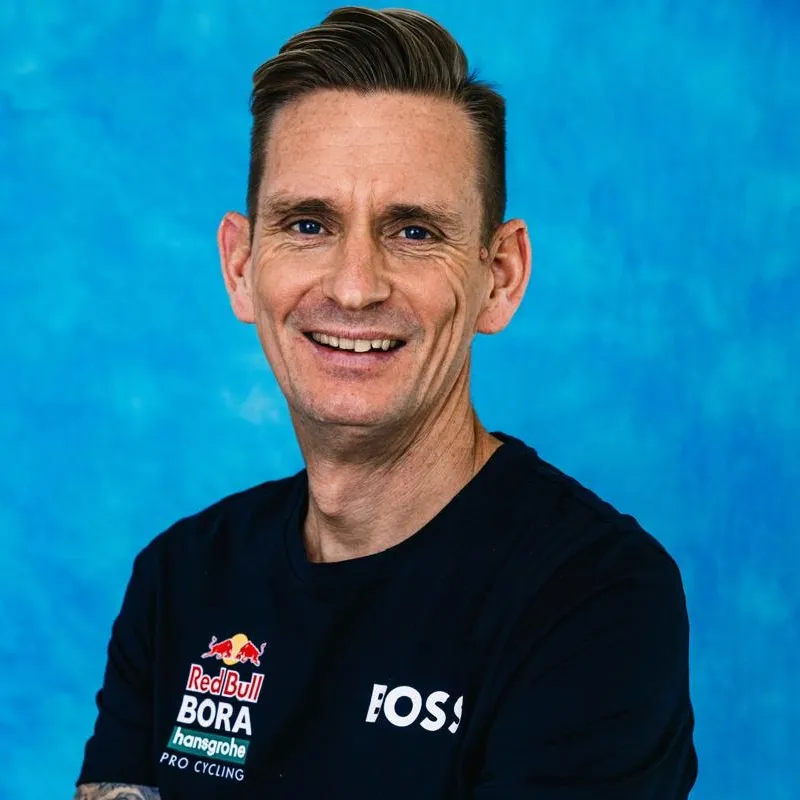
Work With an S2S Coach
Train with the same sports scientists and coaches behind WorldTour performance. Our coaches build individualised programmes around your physiology, goals, and schedule.