Why Pros Eat More to Get Leaner & Faster - Ask a Cycling Coach Podcast
1. Introduction
00:00Today, we are going to talk about perhaps one of the best ways to manage your nutrition and maybe give you the sort of feel you need to finally get past that FTP plateau. And we have with us Mike Posthumus to discuss this.
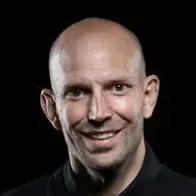
Mike Posthumus is an associate professor at the University of Cape Town. He has his PhD in exercise science from there. He's also the performance director for the Specialized Factory Team. Manages that of the factory XC team, but also the off-road team as well. frequent guest on this podcast, Keegan and Sofia, Matt, the crew there.
Mike, it's really good to have you on. I don't know if you know, but we raced Cape Epic together back in the COVID edition of Cape Epic way back when.
Oh, wow. I didn't know that. You raced with Sofia. Yeah, that's right.
Sofia was with our CEO, and then I was with our COO, Brandon, a good friend of mine. And we we went through the whole way. Our CEO crashed out on stage one, and Sofia went solo from the rest of the race. Good times.
2. Why Calories In vs Calories Out Is Too Simple for Athletes
01:02Yeah, absolutely. I was like, yeah, absolutely. Happy to have you on here. I wanted to bring you on specifically because I months even over now, it's been years ago, I just described the energy availability model. It's a way to be able to manage your nutrition, and I did a really poor job of explaining it. And as a result, a lot of athletes just said, "What is Jonathan on about? This is silly. Calories in, calories out, that's what matters most."
I wanted to bring you on because we have some athlete questions that I think provide some specific context that we use to guide this discussion, but also because I know from speaking with you and different athletes that you leverage this model among all the other tool sets that you have to be able to guide nutrition for athletes in a way that is more nuanced, but also just fundamentally different than just a basic calories in, calories out model. And I think that we can learn a lot from it and get faster.
3. Listener Question: High Training Load but Low Energy & Fatigue
01:56Before we do anything, I want to read these athlete questions cuz again, I think it'll kind of guide us through here. This first one came from Garrett.
Garrett says, "Hey coaches, can you help me understand the energy availability model of nutrition? I saw Jonathan's post about the nutrition calculator and gave it a shot. If you aren't sure what he's talking about, it's linked down below to the to the cycling nutrition But I can't believe that I should be eating this many carbs.
In fact, as a person who has measured food and maintained a 250 to 500 calorie deficit for years, I had a little warning flag go up there. Mike, I don't know if you did, too. I'm nearly certain eating that many carbs will result in weight gain. So, what am I missing?
For more info, I'm 51 years old, have been training and racing seriously for over 30 years. My metabolism has slowed, so I have reduced my caloric intake over the years. Another red flag goes up, but I'm still at 3.9 W per kilogram and competitive. I'm 70 lb and that's 77 kg and about 15% body fat.
My basal metabolic rate is 1,600 and my typical intake is 1,500 calories plus whatever I burn through training. Another flag popped up. So, I don't have a TrainerRoad account, so I can't share my calendar, but my training is typically 8 to 12 hours per week with two hard days and a group ride with the rest endurance. And my FTP is 304 W.
This athlete man, I hope to be able to be like this athlete when I'm 51 years old cuz I'm reading this sounds like my training right now. I'm in the in the perfect position. Yeah. Yeah, actually yeah, yeah, that too. Yeah. so, that's one question that we have from Garrett.
And then Matthew has another question, says, "After hearing a recent discussion on your podcast about RED-S, I'm wondering if I'm in RED-S and don't even know it. My FTP improvement has more or less plateaued for the last 5 years, but I don't know if that is my age of 41 or due to inadequate nutrition.
As a cyclist who trains, I do generally feel tired. I also get sick, thanks to having young children in school, pretty often, but no more frequently than my friends. So, I have kind of always thought, this is just what life is like as a cyclist.
Here's some information on myself, 281 W FTP at 70 kg, that's 154 lb. 8 hours per week, typical daily calorie intake between 2,200 and 2,600.
So, we have one athlete who has looked at something with this energy availability model and says, this is way too many carbohydrates, it's going to make me gain weight. I've been in a deficit for a really long time and I know what my body needs.
And then, another athlete that's saying, is me being tired and getting sick, like, is that evidence of RED-S, or is this just normal as a cyclist?
4. What Is Energy Availability & Why It Matters (RED-S Explained)
04:47So, we have tons of, like, good context to kind of dig in here, Mike. I don't know if you want to jump in on any of that now, or do you want me to guide you through with some basic questions?
I want to jump straight into the second question, and I think a lot of this will will probably answer both.
Great. And the the question I would have would before we talk RED-S, RED-S at the end of the day is a syndrome, and what causes it is low energy availability. And if a if an athlete has questions down that road, I forgot his exact question, the answer to him would be, let's measure your your energy availability and see if you do have LEA, which is low energy availability.
So, the first question is, what is his energy availability? And this is we've essentially going to be talking about the energy availability model, and the first point of it is that how do you calculate energy availability?
5. How to Calculate Your Energy Availability Step-by-Step
05:51Why is energy availability is my preference to use in cyclists? Because the majority of us train with power meters and when you train with a power meter, you are able to very very accurately calculate how much energy you burn while you exercise and I will explain what I do and my little equation.
It might be similar to yours Jonathan. But I don't necessarily just trust the metric my computer throws or my my computer throws at me. Sometimes they use heart rates and I don't know what exactly they use.
But let's just simplify the cross the board. I would ask an athlete what their average power is of a ride. If you take that times the hours and multiply it by four, you've got the amount of calories burnt in that ride. So if you and I'll have to while I'm talking pull out my calculator.
If your average power is 150 watts for two hours times that by four, that is 1,200 calories. So we know and that's pretty accurate. I would like somebody to show me data that shows it's not very accurate. You're going to get a very very good estimation.
So that athlete burnt calories and what energy availability is is how much energy is available from what they ate after you remove that 1,200 calories. So if they ate, let's say 2,200 calories in a day, the energy available is 1,000 calories. And energy availability is expressed as that amount 1,000 calories divided by their fat free mass.
Now fat free mass is simply your body weight minus your body fat percentage. So if you're 100 kg with 15% body fat, and I'm just doing this to make the maths easier, your fat free mass is 85 kg. So, you can calculate your fat-free mass by estimating or hopefully you've got a got a good estimation or a or an established measure of your body fat percentage to be able to calculate your fat-free mass.
But, let's say Jonathan, for you, let's say your fat-free mass is 60 kg and this person is you, 1,000 / 60 is 16 kcal per fat-free mass. And this is the unit of energy availability. And we've got established criteria where we are able to judge this and I can say that fits firmly within the category of clinical low energy availability. And clinical low energy availability results in the syndrome called that we know of as RED-S.
So, anything under 30 kcal per fat-free mass is clinical low energy availability. Between 30 and 40 for males, 45 for females is subclinical energy low energy availability. And anything above 40 for males and 45 for females is an optimal range where we know we are able to take care of all bodily functions and health.
So, how I would do this for this athlete is do a 4-day food diary, calculate everything you ingest in that 4 days, and I would say 4 days because you want to have days that are bigger training days, days that are rest days. You want to get a balance of all.
So, if you want to do it for longer, it would be even more accurate. But, 4 days is a minimum. Calculate everything you eat in that 4 days, write it down, take photos, calculate the exact calories that you consume for that 4-day period, look at the exercise, calculate the energy burnt, look at the difference between that, and divide it across divided by your fat-free mass, and then you'll get an average across that span, and use that average to be able to establish if you are struggling with low energy availability.
6. Why Athletes Underfuel Without Realizing It
09:37Fantastic explanation, Mike. Thank you. the question that a lot of athletes have when they look at this is similar to Garrett's question, the first one is, "Okay, I figured it out. I did the math, or a calculator did the math for me. Why are the numbers so much higher than what I'm used to taking in?" Is that a familiar experience for you with a lot of athletes as well, showing them the numbers, and then them kind of
7. “Fuel the Work”: Why Your Calorie Needs Are Higher Than You Think
10:16maybe even having a bit of a panic moment when they see that they need to take in that many more calories? very, very often. there there there two things I would like to talk to around that. The first is we've got to accept that the majority of endurance athletes chronically under fuel, and we know this. Under fuel not only on the bike, luckily we're winning that battle, but now we're seeing it off the bike.
Athletes just are not eating enough to support them. And when you get comments back like that, it is just acceptance that whatever they've been doing for I forgot the first the the first the first question, how many years he's been doing this for?
30 years. Yeah. Years of years of under eating essentially. So, again, this is a big a major wake-up call, so to speak.
8. Rethinking Fat vs Carbs for Performance
11:04The second point is, and I do assume and we we chatted about this briefly before we started the podcast, you've probably set fats quite low, which I agree with. I do it with with athletes I work with.
My preference is to to set fats very low, because we know that the daily fat requirements are far lower than we would automatically or normally ingest. So, we know to maintain bodily functions and maintain functional performance as well, fat only needs to be between 0.8 and 1.2.
That is a healthy range. So, if we put it right in the middle there, and I believe in your calculator, you've used one, which I personally do as well. that is a very, very low fat content based off a normal diet. And when you reduce fat, and the reason I like reducing fat is because it allows us to really increase the amount of carbohydrate in meals.
So, why have more fat if you could just have more more carbohydrate? Because carbohydrates are going to be more functional.
9. Glycogen Replenishment Timing & Recovery Insights
12:16You are going to see the effect in subsequent training days. I believe you're going to see the performance benefit. So, when they say, "Wow, I can't believe how much it is the the carbohydrate." I'm sure if they haven't followed a proper structured performance nutrition they have never eaten this amount of carbohydrate.
So, that's going to be the the initial shock. Yeah, this is there's an interesting study from Fuchs in 2025 that looked at the replenishment of muscle glycogen and liver glycogen and the time course of that replenishment.
We did cover this on a recent podcast episode. And it was very interesting to see that there's like this 2-hour window where you can get ahead on this replenishments thereafter after exercise. But that muscle glycogen takes in most cases, and it's likely individually variable. It's also likely trainable to a certain degree, but it takes around 24 hours for the your for your muscle glycogen to be able to be reestablished. liver glycogen is happens much faster.
And this is also brings up an interesting point, Mike, that you know, we're looking at maybe optimizing body composition, but taking in and like you said, perhaps we're kind of winning the battle in terms of getting athletes to fuel on the bike with carbohydrate, but off the bike, not only are we trying to optimize body composition, so the macro percentages are shifted away from fat, you're getting enough protein, you're getting enough fat, but where the the carbs are increased and it's very plastic, it shifts with your training.
So, yes, it's fueling your training, but above all what it's and and it's optimizing body composition, but above all, maybe this approach of having higher carbohydrate intake off the bike all the time is also just helping with this replenishment so substantially compared to the deprivation techniques that we've all accepted as normal over the years that then makes it so that you can train better the next day and the next day and the next day and get better performance improvement, right?
10. Will Eating More Make You Gain Weight?
14:18It's an interesting concept and maybe one that we've missed. Like we always look at this in terms of like optimizing body composition, but it enables performance, you know? it's a it's a different perspective on it. Mike, another another question on this. Why won't I gain weight?
If I'm looking at this and I have these concerns and I and you you give me these numbers and the numbers seem too high to me and my question is, well, won't I gain weight? Why won't I gain weight or will I on this approach? What would you say to that?
Again, it it is going to be very individual. So, I can't say you will or you won't. My recommendation to you would be we have to start and I like looking at performance nutrition as a health from a health first approach and when you look at it from a health first approach, we've got to ensure that we've got optimal energy availability.
If we are concerned about health of the athlete and if we're not, we need to be very clear and say, "Well, we are going to prescribe the macros that we are currently doing for meals. we are prescribing in a subclinical range, and we can only do this for a certain amount of period for a certain amount of time, and in this time we trying to optimize body composition, and then we have to return to optimal ranges again."
And my recommendation would be to have your line in the sand, and then just monitor and weigh yourself regularly, but follow the plan, weigh yourself regularly, and then have a look at what is going Sometimes an athlete might be gaining a little bit of weight, but then what can we then do to bring it down?
We can maybe just decrease a little bit and see if we could change the trend, but don't be put off by it. what we also know is certain athletes that have been in this call it that have struggled with RED-S, one of the clinical manifestations of RED-S is unfortunately that metabolism through the thyroid hormone and thyroid function is suppressed.
So, metabolism does get affected in some of these cases. So, we really it is very hard to say point-blank that an athlete is going to gain weight or lose weight, and that is why even the energy in energy out model is not going to result in a better outcome because energy out is also a largely an unknown.
We are able to measure basal metabolic rate, but when we not lying down on a bed getting a a basal rate taken, we don't know what our metabolisms are doing. So, we can do There are some some great methods and working with some companies now to to to be able to do a far better job at calculating daily energy expenditure, but for the majority of people, there's a it's a large unknown.
11. Finding Your Optimal Energy Availability Range
17:23Yeah. This is the principle I'm hearing here is you need to have a baseline. You need to have data that you can work off of and evidence of effect and then you need to tweak and adjust thereafter. Does this we talked about this threshold of 35 kilocalories per kilogram of fat-free and that being kind of like a point where below that and especially or give me 30 I think was the number that you used or below 30 does put you perhaps in clinical LEA.
Is there is there a lot of flexibility here? Do you see with some athletes that 30 is right and for others even at like a higher like 40 or 45 they maintain or is it generally speaking is it safe to say that if you're 40 and above you're not going to be optimizing your body No, no. I think it is going to be slightly different for for every athlete.
So there's so many nuanced little changes in sort of what they call neat non-exercise activity thermogenesis that can affect these balances. So it is very hard to say that you know they and a certain athlete will be in energy balance at an energy availability of 35.
From my experience that is roughly sort of what I would see quite often an athlete when they come in as well I've got to listen to them and and hear what their goals are. In majority of cases an athlete wants to optimize their body composition and in that case as I explained I will target this range of subclinical low energy availability with a warning and with a recommendation and prescription that this is only done for a few weeks and then returning and sort of using a approach across the season.
Something you and I talked about before we started this call is it's important to look at your race calendar and overlay all of this and saying, "Well, when do we want to at what stage of our season do we want to target body composition? When do we just want to ensure health and performance? And how do we want to periodize that through our year?
12. Periodising Nutrition Across Training & Race Season
19:40So, this is the term, periodised nutrition or periodised carb intake I've heard. There's a lot of periodised is applied not just to your training, but also to the nutrition side of things. When we're looking at an energy availability prescription, are you You talked about different scales where you would do it at different times in the year, but then intra-week, so when we're talking day-to-day, if I have a big day where a big endurance day or a hard interval day, a substantial calorie burn day, would I follow a different would I be at 45 or 40 on those bigger days? And then on an easy day, would I drop down to 35 or 30?
Are you periodizing to that degree and that scale for an athlete?
Yes, definitely. So that is essentially when people started talking about periodized nutrition and we've got to talk a little bit about the the evolution of the the practice.
13. Fueling for Hard vs Easy Days (Daily Nutrition Strategy)
20:33Originally, it was bigger days I eat more, easier days I eat less. That has really evolved with a work published by Sam Impey where he introduced the concept of fueling for the work required. And what fueling for the work required to really simplify it is what I eat today is determined by what I have to do tomorrow.
Because we want to ensure that our glycogen levels are at a level to support what we need to do tomorrow. And that goes for hard training sessions. We know when we're doing a hard training session, we need to enter it with full glycogen.
I use the traffic light system where they would have green being higher carbohydrate, orange being medium, and red being low carbohydrate. So, I would definitely include far more green meals leading into a big key session day on the bike to be able to to fuel that properly.
But then also, alternatively, you can get a far better training adaptation through sometimes approaching and entering easier rides with slightly lower glycogen availability. and this is what what Sam refers to in that work as the the glycogen hypothesis in that you can get a far better training adaptation if you enter a very easy ride, for example, with lower glycogen levels and you finish it within this Goldilocks range, we do then know that transcriptional factors are upregulated and the adaptation to that training is far better.
So, that is exactly why we periodize within a week. I referred to it in the discussion with you before. That is the real micro periodization.
14. Carb Timing: How to Fuel Before Key Workouts
22:26And then I described earlier the the macro periodization across the across the year and across the season. This makes sense with that 24-hour replenishment range of muscle glycogen shown in that Fuga study that this is why you want to come into those rides with more carbohydrate beforehand.
So, in a scenario where I may have let's just use my my calendar right now. Today, I think I'm staring down the barrel of like 3 by 20 sweet spot. That's a big one today. You should be eating right. I had myself a rice-filled breakfast, it's fair to say. yesterday was an easier day.
It was just an hour of riding right around 70%, like 68% FTP was was basically my workout yesterday. with that in mind, in that scenario, would you have me taking in after yesterday's workout, would you have me making sure that that point forward I'm taking in higher I'd be on the green system as you said, rather than being on that that red one? And then yeah, that is a perfect example.
So, as you finish the day and you have your recovery from yesterday's training, for that lunch, for the dinner you have after that, I would definitely be eating green meals in preparation for today's training session. So, as you explained, getting the glycogen up so that you have an increased glycogen availability for today's training session.
Yeah, that makes sense. You talked about the macro scale, I want to touch on that because logic would point This is logic. Many times logic isn't correct. but we have in our mind, I'm racing Leadville this year. I want to go sub-7. That's the That's the big goal to go sub-7 at Leadville. Logic for a lot of people would say, "Give myself an excess of carbohydrate leading up for as long as I can in my training, and then or an excess of calories, I'll just simplify it.
15. When to Focus on Weight Loss vs Performance
24:21When I get close to Leadville, that's when I would want to make sure my body composition is That's one strain of thought, but then the other one that is a bit more perhaps experiences a lot of athletes, but also possibly wrong, in the base phase is when I'm going to lose all my weight and then after that, I'm just going to hold it and hold that body composition until race day.
Both are challenging in unique ways. What would you advise an athlete to do? Is it something different from those two approaches? and then and again, it's going to be very individual. simply exactly the same as I would if I was coaching you, Jonathan. how I would periodize your training.
It would be a little bit different for each individual based on their individual needs, their goals. To be honest, my preference would be to have an early season target where we try and lower body and optimize body composition. And we can do this through targeting a subclinical range of energy availability. And we know we can't do this forever. And if we do it for too long, we know that's what it can result in. And we also know that one of those factors could be a decrease in performance. So, we don't want to do that for too long.
So, I would say and actually have depends on how much optimization your your your body composition needs. would say like do we have one block or do we have two of those blocks? however, in the weeks leading into Leadville, I wouldn't I would be wanting to feel for optimizing recovery and performance.
And to me, that would be getting closer to an optimal energy availability as opposed to seeking improvements in body composition. Because if I do that, I'm running the risk of compromising performance in such close proximity to the race that it could have severe consequences on the race outcome.
So, you're saying when the risk is lower, try to take care of it, but then also allow yourself to perform and don't deprive yourself the whole season, strategically picking the time. Not many years as I as I question
16. How to Safely Improve Body Composition Without Hurting Performance
26:44for many years. I would say a few weeks most and then give yourself time to recover. So, if you want to do a three or four-week block, then give yourself three, four weeks to recover, and then then do another three or four-week block, depending on how much like I said, how much you have to lose. But, in the last few weeks, definitely optimize optimize performance.
Yeah. It Does this change for individuals that have a significant amount of weight to lose? A lot of pressure is out there for individuals like that to just deprive and just constantly be in a state of maybe clinical LEA. Is that the But, is is their situation unique to those that are just trying to optimize body composition that is already within like a healthy range?
I would apply exactly the same principles. So, again, why I wouldn't want to stay in a a subclinical range of low energy availability for too long is because we know that that can result in depression of the thyroid function, for example, and many other clinical manifestations. So, to avoid that, I would probably give exactly the same advice - periodize it, recover a little bit, and plan some strategic blocks where you want to target a little bit more aggressively.
17. Practical Ways to Increase Calories Without Feeling Overfull
28:11Practically speaking, for this high carb intake, what practical suggestions do you have for athletes to actually take in this many carbs? Are there specific strategies that you see with adding those foods in or specific types of foods that you recommend for them?
So, I think the the the most important we touched on this a little, but it is we are periodizing it. So, we are we are really getting in the carbohydrates in and around training. And this is a to the to the earlier question you asked me is why they won't gain weight is because this is energy we're putting in that's going to be used immediately.
So, it's energy that's going to be putting in that's going to be stored in either the muscle glycogen or the liver glycogen, and that is going to be used the next time they they train. And we know there's a large amount of of glycogen storage in the muscle, 400 to 500 g of glycogen is stored in the muscle, and around 100 g is stored in your liver.
So, that's a significant amount, and if we consider the fact that after a very hard session, we are going to be depleted. So, again, that allows us in what I've said there, it's nearly 600 g of carbohydrates that we can ingest once we are empty. That's just going to be used to fill our fuel tanks, and then is going to be used again in the next training session. Right. So, this
So, that is also Yep. Yeah, this is So, this is an example where you said it's it's not it's not packing our body full of carbohydrates that's then going to be offloaded into to fat itself. It's it's It's just trying to refill the muscles, refill the liver, and then it's going to get emptied real real quick. That throttle's wide open again. Yeah. I would agree with that.
Unfortunately, there there's no quick fix. It is a lot of food sometimes. That's why rice has become the staple for a lot of cyclists. But rice, potatoes, pastas are all great ways in which to get it.
I wouldn't make this recommendation as a sort of a daily way to get the carbohydrate in, but certainly if athletes are struggling with this when they actually glycogen loading, which is the 24 hours before a race, during that window, there certainly is an opportunity to get some of that carbohydrate in through sugary drinks, through gummies or Haribos, through simply ingesting sweets.
And like I mentioned, sugary drinks is a great way and it becomes far more far simpler if you're able to drink some of those those carbohydrates and have some of them as sweets. Generally speaking if I do give an athlete a green meal and they really eating that much I would make small little suggestions and one small one would be for example have have a glass of orange juice with a meal and and that that additional orange juice if it is 400 mils of orange juice can be can be up to 240 grams of if not more sometimes of carbohydrates and that can be the difference between a standard orange meal and the green meal.
If athletes really struggle with with ingesting the bulk there are simpler ways and you can add juices and fruit juices just to be able to assist you getting the the carbohydrate in.
18. Foods That Make High-Carb Fueling Easier (and What to Avoid)
31:34Are there foods that you see athletes take in that makes it difficult to hit these high carb targets without dragging up fat and or You know, I'm I'm not sure I 100% understand the question is that is some struggle with a bulk if they eat too much fiber.
If you are trying to fill a plate with with vegetables that's and you're trying to hit a green meal the two are going to be fighting for for space in your in your stomach so to speak. So if you are also struggling with with fullness and being able to hit a green meal majority of the time you you are simply trying to eat too much fiber in that meal as well.
Certainly the green meals which aren't done often they are done strategically when you need the carbohydrate and when you do them you can try and reduce the fiber a a bit to make space for the for the carbohydrates.
Yeah, that makes sense. The question and that was actually my next one which was on fiber and when I would want to incorporate or not incorporate fiber into the diet. one question I have though a more direct one to what I was saying before is many times people view carbohydrates as things like donuts, cookies, brownies, the the simple carbohydrate things that we think of. however, those those usually contain a lot of fat but socially they're marked as carbs.
19. Are Sugary Foods OK for Athletes?
33:10So, we just think it's just carbs is there a in taking those sort of foods, what sort of challenges does it introduce I guess for for athletes that are trying to follow this energy availability macro controlled model?
Exactly. And this is what we spoke to earlier. We have sets and your calculators have set, have calculated everything offsetting fat very low. I believe you've set fat at 1 g per kilogram of body weight which is very low and if you have a donut that's probably going to be your daily limit.
Yeah, real quick. is going to be very hard to fit in simply because of all the additional fats you get with the carbohydrates. So, the recommendation is always to try and get a simple source of carbohydrate. so that you can get the carbohydrates without the additional fats added. Yeah, it makes a a whole lot more sense.
Back to the fiber question in general are there times you're telling athletes to take in more veg and get their carbohydrate sources from more fiber and then times during the year when you're saying less or even intra intra week like we were talking about?
Yeah, so the two instances I'll be talking about greens, green meals, the high carbohydrate but for all the other meals, especially when we sometimes when we do include red meals, that's really is an opportunity where you want to try and fill yourself up.
So, here you're using fiber and increased salads and increased amount of vegetables on your plate to be able to leave there full while eating lower carbohydrate. exactly the same as orange meal, depending on how much carbohydrate you want to ingest there to be make sure that you don't leave, leave your meal still hungry.
You can increase the amount of fiber and I always try to encourage athletes that there's certain, fibrous vegetables you can include that I would regard as free and you can eat unlimited amounts of them, if you are still feeling full. So, we definitely encourage big colorful plates, but try and really emphasize the color and the the the vegetables and the salads more on the orange and the red meals as opposed to the the green meals.
That was awesome. Mike, I feel like we've covered a lot of ground really quickly. and and it's been hopefully it's been helpful for everybody listening to this. I have questions that I want to ask that are a bit separate from nutrition as well, if that's okay. They aren't even on the doc that I sent to you. It's more about your work with some of like the world's best athletes.
Last year we saw a historic year with multiple historic accomplishments by the athletes on Specialized Factory Racing in the XCO world.
20. Inside Elite Performance: What Top Pros Do Differently
36:00can you speak to what the difference is with, I mean, athletes like like Laura and Sina and Christopher and and Victor and, you know, and Adrian, they're they're incredible athletes and they've always been
And Haley and Martin. And Martin, forgive me, yeah, yeah. Chila, of course.
And Haley. And Haley. It's a big team. all these athletes, they're they're they're incredible athletes. They have been, that's like part of their DNA, don't get me wrong, but what what was he what was different last year? What what made this shift from being incredible athletes to not just incredible athletes out there on course, but dominating on course? What do you think? You should have warned me of this one.
Sorry. No, it's We can edit it in post. You can think as long as you need. able to have the privilege of working with them. And they're all exceptional athletes in their own right.
I think I've now been with the team for for 5 years and don't think we've really I haven't done anything differently, haven't changed, certainly gained more experience, but it has been 5 years of building trust. I think that has been one key component of the success we have achieved within the team. And I can't certainly I can't say it's it's one thing specifically. It's more just a combination of hard work from them. I wouldn't give myself any credit.
It's the whole team from mechanics, one years, to management, the great work Tara does, to the great work the individual athletes as coaches do. I don't coach all of them. I do have the privilege to coach some of them, but certainly not all of them. And when I do not coach them, obviously work closely together with their coaches to try and sort of form a performance group around each athlete.
We just try and support them best we can. And I think what we've done well over the last few years is just learn sort of what each athlete needs to perform and then just allow them to do what they do best.
What does the role of performance director entail? Like are are you going out and talking to fringe companies that are developing new measuring techniques or training techniques? Or like on the equipment side, are you getting into the equipment side and thinking about aerodynamics and rolling resistance and everything else?
How far does your purview extend over the realm of performance?
So, probably a little bit of everything you've mentioned. I'm lucky in that I am an exercise scientist, so it is my role and my my job to to keep up to date with the most recent so-called trends in performance and and monitoring and coaching. And I do try and keep up to date with everything happening in the field.
I'm also a performance nutritionist, which allows me to to help each of our athletes in both the XC and the off-road team with with exactly what we talked this whole podcast about.
Then I've been fortunate enough as well to to link into various product teams within Specialized and help structure some of the feedback coming from our riders using some of that feedback to drive new product, to drive innovation.
Certainly over the last year or so made excellent improvements in some product. I can't say more, but we've done some great work and so certainly have been involved in in the product side as well, but more just trying to channel the athlete feedback, making sure that the athletes requests are are heard, and that we are taking positive steps towards giving them the equipment they need as well that they feel that they need to perform.
I have been very lucky in sort of being one small components the Specialized machine, and we really are spoiled in that we've got the most unbelievable teams that are making the most the the best bikes in the world.
I can say that, and the best I can go down the line. We've We're spoiled by having exceptional shoes, helmets, tires, wheels. So, I must stop now because otherwise I'm going to leave things out, but we are certainly very special.
We are certainly very spoiled by having all these these product teams available to to get us what we need.
The last question, and then I'll I'll let you go. I appreciate your time. The last question I want to ask is centered around Victor's performance last year. Victor's just such an incredible athlete, and he went through a period where he was struggling to be able to deliver the results that he wanted to deliver. what what do you do as a performance director when you see an athlete like that?
21. Managing Athlete Slumps, Injury, and Comebacks
41:29Perhaps it's different for an athlete like Victor versus one of us who's listening to this who might be in a slump of our own. But, how do you help an athlete in those situations when they aren't fulfilling their potential? Is it always just a question of going back to fundamentals, and there's something being missed, or is it less tangible and more into managing mindset and and Yeah, so I'll speak a little bit to the Victor one.
I would say that that's a probably a little bit harsh. There was Victor had a lot of bad luck last year. he had a big crash halfway through the through the season, and he really struggled to recover from the crash. it happened sort of when you then sort of land up on the back foot and having to chase back in the middle of a middle of a European block.
Sometimes it looks like the season isn't going to plan, but understanding why it is going in a certain direction and giving him the confidence that he's still supported and cared for and given the space to be able to miss a World Cup, go to altitude, do the preparation he needed to do to be in the shape that you needed to be in for Worlds.
I think that is another area where I guess my role comes in in that I can go to the team and we've got a very supportive management structure that understand that if an athlete needs to take a step back, miss a race to be able to prepare optimally for a World Championships or for a race that they want to target, we are able to allow that because we've got three other guys in our team that can stand up and win.
We've got We've got Martin that won a World Cup in Val di Sole last year. We've got Chris that won a few and we've got Adrian that is extremely extremely close and would have won if if if Chris didn't beat him. So, we we've got the we are very fortunate to have four guys and three girls that can each in their own rights win a World Cup.
So, if we have an athlete that is a little bit struggling and needs some time, we can allow them that time to recover and it isn't a problem and there's no stress from the from the brand or there's no stress within the team like some other teams might have that only have one star.
We've got a few stars, so it is expected from time to time for a rider to go through a little patch where they're struggling and our role is just to work together to to allow them to get out of that and I feel we did a great job last year with Victor, allowed him to to go to altitude.
He actually missed Leget and he rocked up in worlds and and won the XCC title. So, the rest is history, but that is just an example of us having the the privilege of a team where we can actually allow riders to to take their time to be able to get the individual peaks and and reach their goals.
You're doing incredible work there as is the rest of the team. it's super exciting to watch. If you watch the World Cups, those will be happening toward the end of April, I believe. Is the first one in Korea this year? early May.
Short track is 1st of May. First of May. Short track and then the year 3rd of May. So, 3rd of May. that's going to be an exciting time to see that. But before then, we're going to have a chance to see the Specialized off-road athletes performing that Mike also is involved in helping with and you're just doing fantastic work, Mike.
I know the athletes are the ones out there doing the work on the bikes, but thank you for for all you do. It makes for exciting racing and watching for all of us and we're excited to see it. If you watch the World Cup stuff, you might even hear or see Mike on the side of the course talking to the athletes. and now you have a person to connect that to. So, Mike, we appreciate your time.
Thanks for helping educate us on the energy availability model and how we can better manage our nutrition. If you have questions, leave them down below in the YouTube comments or in Spotify. Let us know. If you want to become a faster cyclist, this nutrition aspect that we're talking about is a big part of it. We have a nutrition calculator that you can give you some targets that you can work on and measure, like Mike said.
And if you want to get faster on the training side, go to trainerroad.com, sign up. It'll make you a faster cyclist. We'll talk to you all next week. Thanks, everybody. Thank you, Jonathan.
Work With an S2S Coach
Train with the same sports scientists and coaches behind WorldTour performance. Our coaches build individualised programmes around your physiology, goals, and schedule.