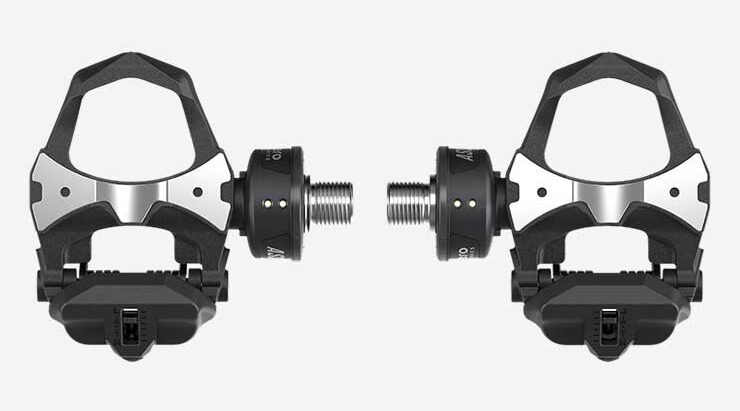
Cycling is a fairly unique sport due to the ability to be able to get a direct measure of workload. Power meters have been around for a few decades already and are able to measure your power output in real time during training and racing.
Immediately after the power meters were first released to the consumer market, they were extremely expensive and heavy, use was limited to certain professional cycling teams and others that could afford them. Recent advances in technology have seen power meters become much more affordable and their popularity has increased among cyclists of all levels.
In this article, we will provide some insight into how we use power meters with our athletes.
There are really two main ways that your power meter can be used.
- Setting the training intensity during interval training. Most cyclists who are introduced to power meters fall under the mistaken impression that the most effective use for their power meter is in setting the intensity. However, this might not always be beneficial (which we will highlight below).
- Collecting data for analysis after your training. Cyclists love data and if we can measure it, we probably will. However, data is only really valuable if it is correctly interpreted. Power output helps cyclists and their coaches monitor training load and, most importantly, progression. Using the power meter to collect data for later analysis is the more effective strategy.

Photo by @RayCoxCycling
Using the power meter to set training intensity:
Before the advent of power meters, most elite cyclists used heart rate as a measure of training intensity. Heart rate in a laboratory setting is almost always linearly related to power. i.e. as power ouput increases, so does heart rate and the rate of increase stays consistent. It was therfore a useful way to set specific training zones based on a laboratory test done at the beginning of the season in a performance laboratory.
However, out in the field (on the road or trail) there are many factors that affect the relationship between heart rate and power. These include dehyrdration, temperature, altitude, fatigue, caffeine intake, stress and body position. Together these factors can change heart rate by up to 25 beats per minute for the same power output.
Power meters measure the amount of work done while cycling. Power output, measured in watts, is the product of force and angular velocity. Power is not influenced by environmental conditions, fatigue or any other factors, which makes it a less variable measure of intensity than heart rate or rating of perceived exertion.
Does that mean you should only use power to presribe training intensity?
Although power is a very objective and reliable measure of intensity, doing intervals based solely on power may not be the most effective strategy. A study conducted by Dr Jeroen Swart at the Sports Science Institute of South Africa examined improvements when training by power or heart rate.
HR-based Training vs. Power-based Training – With Surprising Results
The study took 21 elite male cyclists and trained them using either power or heart rate prescribed interval sessions. Before and after a 4 week training period, the athletes completed a VO2 max and peak power output test as well as a 40km time trial. To ensure that they had all performed exercise at the same intensity, the average training power outputs and heart rates from all the training session for each group were compared. They were identical.
When the performance tests were compared, the peak power output tests showed that the heart rate group had improved by over 5% while the power group had improved by only 3.7%. Analysis determined that the heart rate based intervals were 60% more likely to result in improvement than the power based intervals.
If both groups trained at the same average intensity, how can that be? Well, another often cited deficiency of heart rate monitors is the lag between the increase in intensity of the exercise and the increase in heart rate. This can often be as long as 30 seconds. As a result, the heart rate group had performed intervals where the initial power outputs were very high in an attempt to get the heart rate up to the target.
Later in each interval, the power outputs dropped off significantly, ending up much lower than that of the power group. The power group, as expected, churned along at an even intensity for each interval. The hyposthesis is that this initial surge in the heart rate group could have been responsible for the extra training effect of using heart rate.
That said, using power to prescribe training intensity can allow the athlete or coach to progressively increase the target intensity and when this is done appropriately, it can force greater improvements in performance.
A power meter can keep you honest during your training and prevent you from soft pedalling during your intervals. If you see your power output starting to drop towards the end of your interval, you are more likely to try and put in a little more effort to keep it at the target wattage.
Heart Rate & Power are Both Useful Metrics
At Science to Sport we use both heart rate and power to prescribe training, depending on the specific session. Setting the right intensity requires analysis of the training data to ensure progression and avoid excessive fatigue.
Analysis of Your Training Data
The reliability of power output data you record during a training session makes it a great variable to be able to accurately measure and monitor improvements in training status. If you are able to produce more power over the same time interval, then you are responding favourably to your current training load.
While speed up your local climb can be a used as a more crude measure of progression, it will be influenced by wind, temperature or trail conditions if you are on the MTB. Power meters turn your bike into your own mobile testing laboratory and allow you to perform your very own performance tests every time you repeat a standardised training session.
Use Your Power Meter for Racing Analysis, Especially Pacing
Power meters are great for race analysis too. If you are working with a coach or perform all your analysis yourself, race data may allow you to determine what went wrong during your race. Did you go too hard too early? Did you make too many surges early on in the race that you paid for later? How did you pace yourself during the race?
Use Your Power Meter to Fine Tune Nutrition
In addition, knowledge of the amount of work done (in kilojoules) during your training can allow you to fine tune your nutrition to ensure that your energy intake is matching your energy expenditure.

Photo by @RayCoxCycling
How to Monitor Training Load with a Power Meter
Once you are recording all your training sessions with a power meter, you are able to plot an accurate Performance Management Chart (PMC). There are a number of different applications that enable you to plot a PMC; such as Trainingpeaks, Golden Cheetah and others. The variables plotted on a PMC include your chronic training load (CTL), acute training load (ATL) and training stress balance (TSB). These are defined in the table below.
The Performance Management Chart (PMC)
The PMC will give you a snapshot of your fitness (CTL) and how fatigued you are likely to be (TSB). How high a CTL to aim for is dependent on many factors such as your training history, age, work related stress and others. A top professional road ride might aim for a CTL of 100-130 while your mid 40’s exec / weekend warrior will be best off with a lower value such as 65 or 70.
We have covered monitoring training load with power extensively in our article on the subject here.

Photo by Greg Beadle
How can I ensure that my training load is sufficient?
Analysing individual session data will be able to assist you in establishing if you current training load is sufficient to produce optimal gains. Analysing training data will allow you to assess progression. Are you managing to produce a higher average power output for the same interval session? If not, why not? Are you training too hard and not recovering? Do you need to train harder? That’s where an expert coach will come in. They have years of exeperience and often first hand knowledge through their own racing experiences to guide your training appropriately.
As coaches we use a number of metrics to monitor external training load (the stress applied to the body), but also use other measures of stress to ensure that we don’t miss anything. An example is the Lambert and Lamberts Submaximal Cycling Test (LSCT). This and other tests allow us to measure the internal load (i.e. how you are responding to the load).
In the meantime, avoid becoming obsessed with the numbers and remember to enjoy your riding as well.
If you enjoyed this article, you may be interested in our online short course, Cycling Science: the essentials of cycling physiology and coaching.
| Functional Threshold Power (FTP) is the maximal average power output that you can sustain for an hour. This is the value that the PMC uses to judge the intensity and load of any trianing session. We at Science to Sport establish your FTP from physiological testing we perform in our laboratory, alternatively, a common method of measuring FTP is to do a 20min maximal effort and to multiply the average power of this effort by 0.95. |
| Training Stress Score (TSS) is a score assigned to each training session to quantify the stress of the session. Riding at your FTP for one hour will produce a TSS of 100 points. The algorithms built into the PMC will assign an exponentially higher TSS for efforts that are above your FTP. |
| Acute Training Load (ATL) is a 7 day rolling average of your TSS scores. The ATL can be loosely regarded as a measure of fatigue. |
| Chronic Training Load (CTL) is a 42 day rolling average of your TSS scores and provides an objective measure of fitness. |
| Training Stress Balance (TSB) is the difference between CTL and ATL and provides an indication of ‘freshness’. Negative TSB values indicate that some acute fatigue may be present. |